December 26, 2025
Trumpets, tiny scroll, and two witnesses in Revelation
Revelation 8-11

Randy Hill
Big Book Idea
In the end, Jesus wins!
Key Verse | Revelation 10:5-7
And the angel whom I saw standing on the sea and on the land raised his right hand to heaven and swore by him who lives forever and ever, who created heaven and what is in it, the earth and what is in it, and the sea and what is in it, that there would be no more delay, but that in the days of the trumpet call to be sounded by the seventh angel, the mystery of God would be fulfilled, just as he announced to his servants the prophets.
Revelation 8-11
Chapter 8
The Seventh Seal and the Golden Censer
1 When the Lamb opened the seventh seal, there was silence in heaven for about half an hour. 2 Then I saw the seven angels who stand before God, and seven trumpets were given to them. 3 And another angel came and stood at the altar with a golden censer, and he was given much incense to offer with the prayers of all the saints on the golden altar before the throne, 4 and the smoke of the incense, with the prayers of the saints, rose before God from the hand of the angel. 5 Then the angel took the censer and filled it with fire from the altar and threw it on the earth, and there were peals of thunder, rumblings, 1 8:5 Or voices, or sounds flashes of lightning, and an earthquake.
The Seven Trumpets
6 Now the seven angels who had the seven trumpets prepared to blow them.
7 The first angel blew his trumpet, and there followed hail and fire, mixed with blood, and these were thrown upon the earth. And a third of the earth was burned up, and a third of the trees were burned up, and all green grass was burned up.
8 The second angel blew his trumpet, and something like a great mountain, burning with fire, was thrown into the sea, and a third of the sea became blood. 9 A third of the living creatures in the sea died, and a third of the ships were destroyed.
10 The third angel blew his trumpet, and a great star fell from heaven, blazing like a torch, and it fell on a third of the rivers and on the springs of water. 11 The name of the star is Wormwood. 2 8:11 Wormwood is the name of a plant and of the bitter-tasting extract derived from it A third of the waters became wormwood, and many people died from the water, because it had been made bitter.
12 The fourth angel blew his trumpet, and a third of the sun was struck, and a third of the moon, and a third of the stars, so that a third of their light might be darkened, and a third of the day might be kept from shining, and likewise a third of the night.
13 Then I looked, and I heard an eagle crying with a loud voice as it flew directly overhead, “Woe, woe, woe to those who dwell on the earth, at the blasts of the other trumpets that the three angels are about to blow!”
Chapter 9
1 And the fifth angel blew his trumpet, and I saw a star fallen from heaven to earth, and he was given the key to the shaft of the bottomless pit. 3 9:1 Greek the abyss; also verses 2, 11 2 He opened the shaft of the bottomless pit, and from the shaft rose smoke like the smoke of a great furnace, and the sun and the air were darkened with the smoke from the shaft. 3 Then from the smoke came locusts on the earth, and they were given power like the power of scorpions of the earth. 4 They were told not to harm the grass of the earth or any green plant or any tree, but only those people who do not have the seal of God on their foreheads. 5 They were allowed to torment them for five months, but not to kill them, and their torment was like the torment of a scorpion when it stings someone. 6 And in those days people will seek death and will not find it. They will long to die, but death will flee from them.
7 In appearance the locusts were like horses prepared for battle: on their heads were what looked like crowns of gold; their faces were like human faces, 8 their hair like women's hair, and their teeth like lions' teeth; 9 they had breastplates like breastplates of iron, and the noise of their wings was like the noise of many chariots with horses rushing into battle. 10 They have tails and stings like scorpions, and their power to hurt people for five months is in their tails. 11 They have as king over them the angel of the bottomless pit. His name in Hebrew is Abaddon, and in Greek he is called Apollyon. 4 9:11 Abaddon means destruction; Apollyon means destroyer
12 The first woe has passed; behold, two woes are still to come.
13 Then the sixth angel blew his trumpet, and I heard a voice from the four horns of the golden altar before God, 14 saying to the sixth angel who had the trumpet, “Release the four angels who are bound at the great river Euphrates.” 15 So the four angels, who had been prepared for the hour, the day, the month, and the year, were released to kill a third of mankind. 16 The number of mounted troops was twice ten thousand times ten thousand; I heard their number. 17 And this is how I saw the horses in my vision and those who rode them: they wore breastplates the color of fire and of sapphire 5 9:17 Greek hyacinth and of sulfur, and the heads of the horses were like lions' heads, and fire and smoke and sulfur came out of their mouths. 18 By these three plagues a third of mankind was killed, by the fire and smoke and sulfur coming out of their mouths. 19 For the power of the horses is in their mouths and in their tails, for their tails are like serpents with heads, and by means of them they wound.
20 The rest of mankind, who were not killed by these plagues, did not repent of the works of their hands nor give up worshiping demons and idols of gold and silver and bronze and stone and wood, which cannot see or hear or walk, 21 nor did they repent of their murders or their sorceries or their sexual immorality or their thefts.
Chapter 10
The Angel and the Little Scroll
1 Then I saw another mighty angel coming down from heaven, wrapped in a cloud, with a rainbow over his head, and his face was like the sun, and his legs like pillars of fire. 2 He had a little scroll open in his hand. And he set his right foot on the sea, and his left foot on the land, 3 and called out with a loud voice, like a lion roaring. When he called out, the seven thunders sounded. 4 And when the seven thunders had sounded, I was about to write, but I heard a voice from heaven saying, “Seal up what the seven thunders have said, and do not write it down.” 5 And the angel whom I saw standing on the sea and on the land raised his right hand to heaven 6 and swore by him who lives forever and ever, who created heaven and what is in it, the earth and what is in it, and the sea and what is in it, that there would be no more delay, 7 but that in the days of the trumpet call to be sounded by the seventh angel, the mystery of God would be fulfilled, just as he announced to his servants the prophets.
8 Then the voice that I had heard from heaven spoke to me again, saying, “Go, take the scroll that is open in the hand of the angel who is standing on the sea and on the land.” 9 So I went to the angel and told him to give me the little scroll. And he said to me, “Take and eat it; it will make your stomach bitter, but in your mouth it will be sweet as honey.” 10 And I took the little scroll from the hand of the angel and ate it. It was sweet as honey in my mouth, but when I had eaten it my stomach was made bitter. 11 And I was told, “You must again prophesy about many peoples and nations and languages and kings.”
Chapter 11
The Two Witnesses
1 Then I was given a measuring rod like a staff, and I was told, “Rise and measure the temple of God and the altar and those who worship there, 2 but do not measure the court outside the temple; leave that out, for it is given over to the nations, and they will trample the holy city for forty-two months. 3 And I will grant authority to my two witnesses, and they will prophesy for 1,260 days, clothed in sackcloth.”
4 These are the two olive trees and the two lampstands that stand before the Lord of the earth. 5 And if anyone would harm them, fire pours from their mouth and consumes their foes. If anyone would harm them, this is how he is doomed to be killed. 6 They have the power to shut the sky, that no rain may fall during the days of their prophesying, and they have power over the waters to turn them into blood and to strike the earth with every kind of plague, as often as they desire. 7 And when they have finished their testimony, the beast that rises from the bottomless pit 6 11:7 Or the abyss will make war on them and conquer them and kill them, 8 and their dead bodies will lie in the street of the great city that symbolically 7 11:8 Greek spiritually is called Sodom and Egypt, where their Lord was crucified. 9 For three and a half days some from the peoples and tribes and languages and nations will gaze at their dead bodies and refuse to let them be placed in a tomb, 10 and those who dwell on the earth will rejoice over them and make merry and exchange presents, because these two prophets had been a torment to those who dwell on the earth. 11 But after the three and a half days a breath of life from God entered them, and they stood up on their feet, and great fear fell on those who saw them. 12 Then they heard a loud voice from heaven saying to them, “Come up here!” And they went up to heaven in a cloud, and their enemies watched them. 13 And at that hour there was a great earthquake, and a tenth of the city fell. Seven thousand people were killed in the earthquake, and the rest were terrified and gave glory to the God of heaven.
14 The second woe has passed; behold, the third woe is soon to come.
The Seventh Trumpet
15 Then the seventh angel blew his trumpet, and there were loud voices in heaven, saying, “The kingdom of the world has become the kingdom of our Lord and of his Christ, and he shall reign forever and ever.” 16 And the twenty-four elders who sit on their thrones before God fell on their faces and worshiped God, 17 saying,
“We give thanks to you, Lord God Almighty,
who is and who was,
for you have taken your great power
and begun to reign.
18
The nations raged,
but your wrath came,
and the time for the dead to be judged,
and for rewarding your servants, the prophets and saints,
and those who fear your name,
both small and great,
and for destroying the destroyers of the earth.”
19 Then God's temple in heaven was opened, and the ark of his covenant was seen within his temple. There were flashes of lightning, rumblings, 8 11:19 Or voices, or sounds peals of thunder, an earthquake, and heavy hail.
Footnotes
[1] 8:5 Or voices, or sounds[2] 8:11 Wormwood is the name of a plant and of the bitter-tasting extract derived from it
[3] 9:1 Greek the abyss; also verses 2, 11
[4] 9:11 Abaddon means destruction; Apollyon means destroyer
[5] 9:17 Greek hyacinth
[6] 11:7 Or the abyss
[7] 11:8 Greek spiritually
[8] 11:19 Or voices, or sounds
Table of Contents
Introduction to Revelation
Timeline

Author and Date
Jesus Christ is the divine author of this “revelation” (1:1). He describes coming events to his servant John. John, son of Zebedee, was the “beloved disciple” who also wrote the Fourth Gospel and 1, 2 and 3 John. Most scholars believe John recorded these visions while imprisoned on the island of Patmos in the mid-90s A.D. Revelation is addressed specifically to seven first-century churches in the Roman province of Asia (now western Turkey), but the message is for all churches everywhere.
Theme
The word “Revelation” translates the Greek word apokalypsis, which means “disclosure” or “unveiling.” Revelation unveils the unseen spiritual war in which the church is engaged: the cosmic conflict between God and his Christ on the one hand, and Satan and his evil allies (both demonic and human) on the other. In this conflict, Jesus the Lamb has already won the decisive victory through his sacrificial death, but his church continues to be assaulted by the dragon, in its death-throes, through persecution (the beast), deceptive heresy (the false prophet), and the allure of material affluence and cultural approval (the prostitute). By revealing the spiritual realities behind the church’s trials and temptations, and by affirming the certainty of Christ’s triumph in the new heaven and earth, the visions of Revelation fortify believers to endure suffering. The reader of Revelation is encouraged to stay pure from the defiling enticements of the present world order.
Key Themes
- Through his sacrificial death, Jesus Christ has conquered Satan, the accuser. Jesus has redeemed people from every nation to become a kingdom of priests, gladly serving in God’s presence (1:5, 18; 5:5–10; 12:1–11).
- Jesus Christ is present among his churches through his Holy Spirit. He knows their trials, triumphs, and failures (1:12–3:22).
- World history, including its disasters, is under the control of Jesus, the victorious Lamb (5:1–8:1).
- God is presently holding back his wrath and preventing his enemies’ efforts to destroy the church. He patiently gathers his redeemed people through their witness for Jesus (6:5–11; 7:1–3; 8:6–12; 9:4–6, 18; 11:3–7; 12:6, 13–17).
- Present disasters are warnings of increasing judgments to come (6:3–17; 8:6–13; 11:13; 16:1–21; 20:11–15).
- Believers will continue their faithful testimony to the death. They will conquer both the dragon and the beast. The martyrs’ victory is now hidden, but it will be obvious when Christ returns (2:10–11, 26–29; 3:11–13; 6:9–11; 7:9–17; 11:7–12, 17–18; 12:10–11; 14:1–5; 15:2–4; 20:4–6).
- Satan attacks the church’s perseverance and purity through persecution, deceptive teaching, and the temptations of wealth and sensual pleasure (2:1–3:22; 13:1–18; 17:1–18:24).
- At the end of the age, the church’s opponents will increase their persecution. Jesus, the triumphant Word of God, will defeat and destroy all his enemies. The old heaven and earth, marked by sin and suffering, will be replaced by the new heaven and earth. The church will be presented as a pure bride to her husband, the Lamb (16:12–16; 19:11–21; 20:7–22:5).
Outline
Revelation contains four series of seven messages or visions. These include letters to churches (chs. 2–3), seals on a scroll (4:1–8:1), trumpets (8:2–11:19), and bowls of wrath (chs. 15–16). There is a general movement from “the things that are” to “the things that are to take place after this.” Yet the visions sometimes return to subjects from the previous sections. The order in which John received the visions does not necessarily indicate the order of the events they symbolize.
The Setting of Revelation
c. A.D. 95
John addressed the book of Revelation “to the seven churches that are in Asia,” namely Ephesus, Smyrna, Pergamum, Thyatira, Sardis, Philadelphia, and Laodicea, although there were undoubtedly other churches elsewhere in the province of Asia (e.g., Miletus and Colossae, see Acts 20:17; Col. 1:2). John had apparently been exiled from Ephesus to the island of Patmos, southwest of Ephesus, and it was probably there that he recorded his visions.

Fact: Megiddo
Megiddo was the site of many important OT battles. It was a walled city that guarded the main road that linked Egypt and Syria. Its setting made Megiddo a strategic military stronghold. In John’s visions in Revelation, Megiddo represents the global combat zone where the final battle between Christ and Satan will be fought. The word Armageddon means “Mount Megiddo” (Zech. 12:11; Rev. 16:16).
Fact: The OT in Revelation
The OT in Revelation. Roughly one-seventh of the book of Revelation consists of quotations from the OT. It is a reminder of just how important it is to read and understand the OT as foundational for the New.
Fact: the altar of incense
In OT times, the altar of incense (8:3–4) stood in the Holy Place of the tabernacle and the temple next to the veil concealing the Most Holy Place. Each morning and evening, the high priest burned incense on the altar (Ex. 30:1–10).
Fact: Scorpions
About a dozen varieties of scorpions exist in Israel. The Lord protected Israel from scorpions during their time in the wilderness (Deut. 8:15). Revelation 9:1–6 compares the demons tormenting the people of earth with scorpions.
The Setting of Revelation
c. A.D. 95
John addressed the book of Revelation “to the seven churches that are in Asia,” namely Ephesus, Smyrna, Pergamum, Thyatira, Sardis, Philadelphia, and Laodicea, although there were undoubtedly other churches elsewhere in the province of Asia (e.g., Miletus and Colossae, see Acts 20:17; Col. 1:2). John had apparently been exiled from Ephesus to the island of Patmos, southwest of Ephesus, and it was probably there that he recorded his visions.
The Seven Trumpets of 8:7–11:19
Restrained judgments from heaven are sent in response to the saints’ prayers.
| Trumpet | Reference | Result |
|---|---|---|
| Trumpet 1 | 8:7 | hail, fire, and blood cast on land—one-third burned |
| Trumpet 2 | 8:8–9 | burning mountain cast into sea—one-third bloodied |
| Trumpet 3 | 8:10–11 | burning stars fall on rivers and springs—one-third embittered |
| Trumpet 4 | 8:12 | sun, moon, and stars—one-third darkened |
| Trumpet 5 (1st Woe) | 9:1–11 | demons from the Abyss |
| Trumpet 6 (2nd Woe) | 9:13–21 | invasion from the east—one-third of mankind killed |
| Trumpet 7 (3rd Woe) | 11:15–19 | kingdom of world becomes kingdom of God |
Rev. 4:1–8:1 John receives a heavenly vision of God on his throne and of the slain Lamb, whose triumph qualifies him to open a scroll and execute God’s future purposes for history. As the Lamb opens the scroll’s seals, John sees images of God’s instruments of judgment and of the saints who will receive salvation.
Rev. 6:1–8:1 The vision of the Lamb receiving the scroll (4:1–5:14) introduces a series of seven visions as the scroll’s seals are broken. These visions show several ways in which the Lamb will bring his enemies to justice (seals 1–4). They also give the reason for his righteous wrath (seals 5 and 7) and describe the final judgment at history’s end (seal 6).
Rev. 8:1 silence . . . for about half an hour. In anticipation of the Lord’s coming judgment (Zeph. 1:7–10; Zech. 2:13).
Rev. 8:2 Seven angels stand ready to sound seven trumpets. This begins limited judgments that warn of coming destruction (compare Ezek. 33:1–6; Joel 2:1).
Fact: the altar of incense
In OT times, the altar of incense (8:3–4) stood in the Holy Place of the tabernacle and the temple next to the veil concealing the Most Holy Place. Each morning and evening, the high priest burned incense on the altar (Ex. 30:1–10).
Rev. 8:3–5 The earthly OT sanctuary had two altars. One was for sacrifice in the courtyard. The other was for incense near the Most Holy Place (Ex. 27:1–8; 30:1–10). John sees only one altar in heaven fulfilling both functions (Rev. 6:9; 8:3). Incense represented the prayers of the saints in the earthly sanctuary (see 5:8; also Ps. 141:2; Luke 1:9–11). Fire from the altar will be flung to earth in judgment in answer to the saints’ prayers.
Rev. 8:6–7 hail and fire, mixed with blood. This is like the seventh plague on Egypt (Ex. 9:24).
Rev. 8:8–9 a great mountain, burning with fire, thrown into the sea. The imagery echoes Jer. 51:25, 42.
Rev. 8:10–11 Wormwood is a bitter-tasting plant with a poisonous extract. A star with these qualities makes a third of the rivers and springs undrinkable just like the Nile’s bloodied waters (Ex. 7:24). Cities under attack often surrendered when their water supply was polluted or cut off (see 2 Kings 20:20; 2 Chron. 32:30; Ps. 46:4).
Rev. 8:12 The darkening of a third of the sun, moon, and stars resembles the ninth plague on Egypt (Ex. 10:21–23). Since stars are still in the sky, this judgment apparently precedes the shaking of heaven and earth portrayed with the sixth seal (Rev. 6:12–14; but see note on 6:13 for another view). This darkness may occur due to smoke from burning cities.
The Seven Trumpets of 8:7–11:19
Restrained judgments from heaven are sent in response to the saints’ prayers.
| Trumpet | Reference | Result |
|---|---|---|
| Trumpet 1 | 8:7 | hail, fire, and blood cast on land—one-third burned |
| Trumpet 2 | 8:8–9 | burning mountain cast into sea—one-third bloodied |
| Trumpet 3 | 8:10–11 | burning stars fall on rivers and springs—one-third embittered |
| Trumpet 4 | 8:12 | sun, moon, and stars—one-third darkened |
| Trumpet 5 (1st Woe) | 9:1–11 | demons from the Abyss |
| Trumpet 6 (2nd Woe) | 9:13–21 | invasion from the east—one-third of mankind killed |
| Trumpet 7 (3rd Woe) | 11:15–19 | kingdom of world becomes kingdom of God |
Rev. 8:13 Woe, woe, woe. The last three trumpets signify increasing judgments on rebellious humanity as the end approaches.
Rev. 9:1 star fallen from heaven to earth. Jesus saw Satan fall like lightning (Luke 10:18). John will later see the “dragon,” whom he identifies as Satan, thrown from heaven to earth (Rev. 12:9). The fact that the key to the shaft of the Abyss was given to him shows that Satan can do nothing without God’s permission.
Rev. 9:2–3 Locusts recalls the eighth plague on Egypt (Ex. 10:14–15) and Joel 2:31.
Fact: Scorpions
About a dozen varieties of scorpions exist in Israel. The Lord protected Israel from scorpions during their time in the wilderness (Deut. 8:15). Revelation 9:1–6 compares the demons tormenting the people of earth with scorpions.
Rev. 9:4–11 These locusts are no threat to earth’s vegetation (grass, green plant, or tree), and they do not look like locusts (vv. 7–9). It seems that these invaders are not literal insects but demonic spirits. Others think they represent military forces. Still others think they are actual locusts whose destructive power is described symbolically.
Rev. 9:11 Abaddon, Apollyon. In Hebrew and Greek, respectively, these words refer to “destruction” and the “one who destroys.” Satan’s demons war against his own human subjects.
Rev. 9:1–12 The star fallen from heaven to earth (v. 1) when the fifth trumpet sounds is Satan. He is the angel of the bottomless pit, whose names mean “Destroyer” (see note on v. 11). This vision shows an increase of demonic activity. This will make rebellious humans more desperate, as God’s patient restraint of evil comes to an end.
Rev. 9:13–14 The golden altar before God answers the saints’ prayers (8:4–5). Ancient Israel’s conquerors, Assyria and Babylon, came from the great river Euphrates. In John’s day this river also marked the eastern boundary of Rome’s influence. Beyond it, barbarian powers such as Parthia threatened the empire. This river represents what holds back chaos and violence. The release of the four destructive angels allows unprecedented bloodshed and suffering.
Rev. 9:16–19 twice ten thousand times ten thousand. Two hundred million is an incredibly large army. But it is not as large as the number of those who worship the Lamb (7:9). These mounted troops are demons, though some think they represent an actual human army.
Rev. 9:13–21 This is the last limited judgment and warning blast. When the seventh and last trumpet sound, “the mystery of God will be fulfilled” (10:7; compare 1 Cor. 15:52; 1 Thess. 4:16). The opportunity to repent will be past (Rev. 9:20–21).
Rev. 9:20–21 did not repent. Those rebelling against God have been tortured by the very demons they worshiped. Yet they take no warning from these final trumpet blasts. idols . . . cannot see or hear or walk. Compare Dan. 5:23; Ps. 115:4–8; Isa. 44:12–20.
The Seven Trumpets of 8:7–11:19
Restrained judgments from heaven are sent in response to the saints’ prayers.
| Trumpet | Reference | Result |
|---|---|---|
| Trumpet 1 | 8:7 | hail, fire, and blood cast on land—one-third burned |
| Trumpet 2 | 8:8–9 | burning mountain cast into sea—one-third bloodied |
| Trumpet 3 | 8:10–11 | burning stars fall on rivers and springs—one-third embittered |
| Trumpet 4 | 8:12 | sun, moon, and stars—one-third darkened |
| Trumpet 5 (1st Woe) | 9:1–11 | demons from the Abyss |
| Trumpet 6 (2nd Woe) | 9:13–21 | invasion from the east—one-third of mankind killed |
| Trumpet 7 (3rd Woe) | 11:15–19 | kingdom of world becomes kingdom of God |
Rev. 10:1–3 Like God on his throne, this mighty angel is surrounded by a rainbow (see 4:3). Like the Son of Man, he comes with a cloud, and his face shines like the sun (see 1:7, 16). His legs like pillars of fire recall the glory of God’s presence in the wilderness (Ex. 13:21–22). His voice like a lion roaring could belong to the Lion of Judah (Rev. 5:5). Some interpreters think this is Jesus himself. However, since 1:1 describes an angel sent by Christ to deliver God’s revelation to John, many think this as simply another great angel.
Rev. 10:5–7 The angel’s stance—one foot on sea, one on land, and right hand raised to heaven—unites the created order (see 5:13; Gen. 1:6–10). The divine Creator is asked to witness the angel’s oath (compare Dan. 12:7; also Gen. 14:22; Deut. 32:40). The angel swears that the time of God’s patience, which entailed delay of his martyrs’ vindication (Rev. 6:10), will end when the last trumpet sounds. The mystery of God to be fulfilled is his plan to unite all things in heaven and earth under Christ’s headship (Eph. 1:10, 20–22). This “mystery” includes the full expression of God’s wrath toward all who resist his reign.
Rev. 10:8–11 Ezekiel ate a scroll and found it sweet as honey in his mouth. John must do the same. He must receive God’s words before he speaks them (compare Ezek. 3:1–3, 10).
Rev. 11:1–2 John was given a measuring rod and instructed to measure the temple of God. Some think this implies that during the great tribulation the Jewish temple will be rebuilt in Jerusalem. Jewish worship will be restored there. At this midpoint of the tribulation, the Antichrist will take “his seat in the temple of God, proclaiming himself to be God” (2 Thess. 2:4). Others see the “temple” in Revelation 11 as a symbol for believers (1 Cor. 3:16–17; 1 Pet. 2:4–10; see Rev. 3:12; 21:22). They note that John must measure the sanctuary, its altar (compare Ezek. 40:2–3), and those who worship there. This “measuring” of persons also shows God’s protection and ownership. John must not measure the court outside, because the holy city will be given over to the nations. This language echoes Jesus’ prediction of Jerusalem’s destruction (Luke 21:24; compare Dan. 8:13). Thus some believe that Revelation was written before A.D. 70 and predicted that disaster. Others think that “the holy city” refers to the true church. Forty-two months (see also Rev. 13:5) is equivalent to “1,260 days” (counting 30 days to a month; see 11:3; 12:6) and “a time, and times, and half a time” (three and a half years; 12:14). This symbolizes the shortness of the church’s suffering, which lasts until Christ comes. These calculations of time echo Dan. 7:25; 12:7.
Rev. 11:4 two olive trees. In Zechariah’s vision, the “two olive trees” symbolized “two anointed ones” (Zech. 4:11, 14). One was a royal leader to rebuild God’s temple (Zech. 4:6–10) and the other was a high priest to lead worship in it (Zech. 3:1–5). Thus the witnesses of Rev. 11:3 represent everyone the Lamb has redeemed to serve as priests and rule as kings (1:6; 5:10).
Rev. 11:5–6 The witnesses especially fulfill the church’s prophetic role. They pour out God’s word as fiery judgment from their mouth. They announce drought as Elijah did (1 Kings 17:1). They turn waters . . . into blood as Moses did (Ex. 7:14–25).
Rev. 11:7–10 The great city that symbolically is called Sodom and Egypt is the site of the martyrs’ death and their Lord’s crucifixion. See also references to “the great city” in 16:19; 17:18; and five times in 18:10–21. In these instances “the great city” is called “Babylon,” which stands for Rome. In 11:8, however, the “great city” is Jerusalem. It is likely that John has merged Rome and Jerusalem here into one combined symbol. “The great city” is further identified symbolically (or “spiritually”; see ESV footnote) as “Sodom,” a place known for its sinfulness and rebellion against God. It is also called “Egypt,” which was known for persecuting God’s people. “The great city” symbolizes every empire that rejects God and harms his church.
Rev. 10:1–11:14 This interlude represents God’s patient delay in inflicting his full and final wrath. It assures believers that God will protect his people during the coming terrible times. The angel with the scroll (10:1–11) reveals John’s authority to prophesy and God’s perfect timing in bringing history to a conclusion. On the “interludes” in Revelation, see note on 7:1–17.
Rev. 11:1–14 The visions of the temple and the witnesses reassure believers of God’s protection. However, spiritual protection still allows physical suffering.
Rev. 11:3–14 Scripture requires two witnesses to confirm testimony (Deut. 19:15; Matt. 18:16). The two witnesses of Revelation may represent the saints, as the parallel between Rev. 11:7 and 13:7 suggests. They wear the sackcloth of repentance (compare Isa. 37:1–2; Jonah 3:5; Matt. 11:21) to symbolize their message. Some scholars believe these are two actual individuals who will appear at the end of history.
Rev. 11:11–14 they stood up on their feet. . . . they went up to heaven in a cloud. The two witnesses (v. 3) may symbolize the church. If so, then these verses promise resurrection (see Ezek. 37:10) and enthronement with God (see Dan. 7:13). If the witnesses are two actual individuals, then they are miraculously resurrected at this point. As in Acts 1:9, the “cloud” symbolizes the mysterious active presence of God.
Rev. 8:2–11:18 A brief vision of God’s heavenly temple, focusing on a golden incense altar, opens a new cycle of seven visions, each of which is introduced by an angelic trumpet blast.
Rev. 8:6–11:18 Revelation’s third vision series (with a second interlude in 10:1–11:14) pictures judgments sent from heaven in response to the saints’ prayers. The first four trumpets announce harm on the earth, sea, rivers and springs, and sky. The damage done with the trumpets is limited to “a third.” The “woes” introduced by the last three trumpets are increasingly severe (8:13; 9:12; 11:14). See chart.
Rev. 11:15–18 the seventh angel blew his trumpet. Many believe this trumpet signals Christ’s second coming. has become the kingdom of our Lord and of his Christ. The elders celebrate a future day when God and his Christ have begun their reign by judging the dead (20:11–13), rewarding their servants (21:1–7; 22:1–5), and destroying the destroyers of the earth (20:14–15).
The Seven Trumpets of 8:7–11:19
Restrained judgments from heaven are sent in response to the saints’ prayers.
| Trumpet | Reference | Result |
|---|---|---|
| Trumpet 1 | 8:7 | hail, fire, and blood cast on land—one-third burned |
| Trumpet 2 | 8:8–9 | burning mountain cast into sea—one-third bloodied |
| Trumpet 3 | 8:10–11 | burning stars fall on rivers and springs—one-third embittered |
| Trumpet 4 | 8:12 | sun, moon, and stars—one-third darkened |
| Trumpet 5 (1st Woe) | 9:1–11 | demons from the Abyss |
| Trumpet 6 (2nd Woe) | 9:13–21 | invasion from the east—one-third of mankind killed |
| Trumpet 7 (3rd Woe) | 11:15–19 | kingdom of world becomes kingdom of God |
Rev. 11:19 A deeper opening of God’s temple in heaven brings the ark of his covenant into view as John peers into the Most Holy Place itself, prepared to receive visions that explain the church’s spiritual conflict.
The Seven Trumpets of 8:7–11:19
Restrained judgments from heaven are sent in response to the saints’ prayers.
| Trumpet | Reference | Result |
|---|---|---|
| Trumpet 1 | 8:7 | hail, fire, and blood cast on land—one-third burned |
| Trumpet 2 | 8:8–9 | burning mountain cast into sea—one-third bloodied |
| Trumpet 3 | 8:10–11 | burning stars fall on rivers and springs—one-third embittered |
| Trumpet 4 | 8:12 | sun, moon, and stars—one-third darkened |
| Trumpet 5 (1st Woe) | 9:1–11 | demons from the Abyss |
| Trumpet 6 (2nd Woe) | 9:13–21 | invasion from the east—one-third of mankind killed |
| Trumpet 7 (3rd Woe) | 11:15–19 | kingdom of world becomes kingdom of God |
S4:309 Revelation 8-11
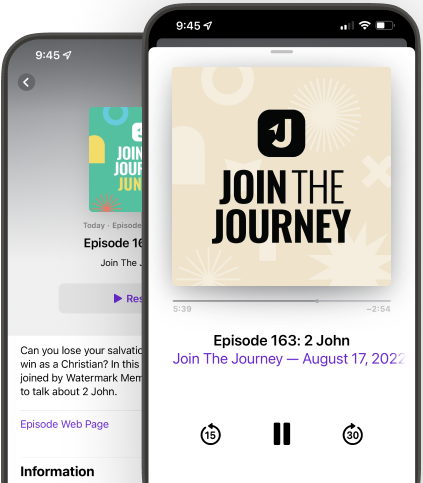
Listen NowDive Deeper | Revelation 8-11
Hello! I hope you are paying attention. It's happening! The entire Bible has pointed— through many stories, first-hand accounts, bad actors, and non-believers—to Jesus and his eventual return to make all things right. God has shown patience with the world during this merciful period of grace that we live in today, but now in Revelation his judgment is unfolding. He said it would happen even back in Exodus 34:6-7 when he spoke to Moses about God's incredible love for his people, but making it clear that the guilty would not go unpunished. Also, consider the prophet Daniel, who foretells in Daniel 9 and 12 the events that are to come.
As we delve deeper into Revelation, the prophecies of the end times become clearer. Trumpets herald the Lord's judgment on the world's idolatry, immorality, and refusal to worship him. God commands his angels to execute the ruin and destruction the world will face. But there is good news throughout this time of judgment. We can find solace in the fact that God is sovereign and fully in charge of all the calamities the world will endure, as he permits Satan to wreak havoc. God's grace and mercy will still be present, using the judgments to call people to himself, but the suffering that will befall unbelievers is unimaginable, as will be their persistence in disbelief. Can all of this really be true for things to come?
I sometimes wonder how this can all be real. The mysteries of our faith are often highlighted in Scripture, assuring believers that full understanding is beyond us, yet belief is our path. Romans 11:33-36 exemplifies this, with the Apostle Paul acknowledging the challenge of understanding God's ways. Regardless of life's trials, we remain certain of God's sovereignty and his governance over the world. Our duty as believers is to follow, trust, and seek opportunities to testify about him. Ultimately, we have to accept the enigmas of our faith, trusting in God's grand design for our benefit. Trust him!
This month's memory verse
"And he who was seated on the throne said, 'Behold, I am making all things new.' Also he said, 'Write this down, for these words are trustworthy and true.'"
– Revelation 21:5
Discussion Questions
1. The celebration of Christ's birth has just been observed, and the conclusion of his life is well-documented. How do you feel about the manner in which the Lord will arrange and prepare everything for his eventual return?
2. It's against our nature, but how do you get comfortable with not knowing everything with confidence about the ways of the Lord? Can you accept the mysteries of our faith?
3. How can a good and merciful God allow and orchestrate the judgment and destruction of the world? Is there no other way?