December 25, 2025
The throne, the seal, and the redeemed in Revelation
Revelation 4-7

Melissa Ortega
Big Book Idea
In the end, Jesus wins!
Key Verse | Revelation 4:1
After this I looked, and behold, a door standing open in heaven! And the first voice, which I had heard speaking to me like a trumpet, said, "Come up here, and I will show you what must take place after this."
Revelation 4-7
Chapter 4
The Throne in Heaven
1 After this I looked, and behold, a door standing open in heaven! And the first voice, which I had heard speaking to me like a trumpet, said, “Come up here, and I will show you what must take place after this.” 2 At once I was in the Spirit, and behold, a throne stood in heaven, with one seated on the throne. 3 And he who sat there had the appearance of jasper and carnelian, and around the throne was a rainbow that had the appearance of an emerald. 4 Around the throne were twenty-four thrones, and seated on the thrones were twenty-four elders, clothed in white garments, with golden crowns on their heads. 5 From the throne came flashes of lightning, and rumblings 1 4:5 Or voices, or sounds and peals of thunder, and before the throne were burning seven torches of fire, which are the seven spirits of God, 6 and before the throne there was as it were a sea of glass, like crystal.
And around the throne, on each side of the throne, are four living creatures, full of eyes in front and behind: 7 the first living creature like a lion, the second living creature like an ox, the third living creature with the face of a man, and the fourth living creature like an eagle in flight. 8 And the four living creatures, each of them with six wings, are full of eyes all around and within, and day and night they never cease to say,
“Holy, holy, holy, is the Lord God Almighty,
who was and is and is to come!”
9 And whenever the living creatures give glory and honor and thanks to him who is seated on the throne, who lives forever and ever, 10 the twenty-four elders fall down before him who is seated on the throne and worship him who lives forever and ever. They cast their crowns before the throne, saying,
11
“Worthy are you, our Lord and God,
to receive glory and honor and power,
for you created all things,
and by your will they existed and were created.”
Chapter 5
The Scroll and the Lamb
1 Then I saw in the right hand of him who was seated on the throne a scroll written within and on the back, sealed with seven seals. 2 And I saw a mighty angel proclaiming with a loud voice, “Who is worthy to open the scroll and break its seals?” 3 And no one in heaven or on earth or under the earth was able to open the scroll or to look into it, 4 and I began to weep loudly because no one was found worthy to open the scroll or to look into it. 5 And one of the elders said to me, “Weep no more; behold, the Lion of the tribe of Judah, the Root of David, has conquered, so that he can open the scroll and its seven seals.”
6 And between the throne and the four living creatures and among the elders I saw a Lamb standing, as though it had been slain, with seven horns and with seven eyes, which are the seven spirits of God sent out into all the earth. 7 And he went and took the scroll from the right hand of him who was seated on the throne. 8 And when he had taken the scroll, the four living creatures and the twenty-four elders fell down before the Lamb, each holding a harp, and golden bowls full of incense, which are the prayers of the saints. 9 And they sang a new song, saying,
“Worthy are you to take the scroll
and to open its seals,
for you were slain, and by your blood you ransomed people for God
from every tribe and language and people and nation,
10
and you have made them a kingdom and priests to our God,
and they shall reign on the earth.”
11 Then I looked, and I heard around the throne and the living creatures and the elders the voice of many angels, numbering myriads of myriads and thousands of thousands, 12 saying with a loud voice,
“Worthy is the Lamb who was slain,
to receive power and wealth and wisdom and might
and honor and glory and blessing!”
13 And I heard every creature in heaven and on earth and under the earth and in the sea, and all that is in them, saying,
“To him who sits on the throne and to the Lamb
be blessing and honor and glory and might forever and ever!”
14 And the four living creatures said, “Amen!” and the elders fell down and worshiped.
Chapter 6
The Seven Seals
1 Now I watched when the Lamb opened one of the seven seals, and I heard one of the four living creatures say with a voice like thunder, “Come!” 2 And I looked, and behold, a white horse! And its rider had a bow, and a crown was given to him, and he came out conquering, and to conquer.
3 When he opened the second seal, I heard the second living creature say, “Come!” 4 And out came another horse, bright red. Its rider was permitted to take peace from the earth, so that people should slay one another, and he was given a great sword.
5 When he opened the third seal, I heard the third living creature say, “Come!” And I looked, and behold, a black horse! And its rider had a pair of scales in his hand. 6 And I heard what seemed to be a voice in the midst of the four living creatures, saying, “A quart 2 6:6 Greek choinix, a dry measure equal to about a quart of wheat for a denarius, 3 6:6 A denarius was a day's wage for a laborer and three quarts of barley for a denarius, and do not harm the oil and wine!”
7 When he opened the fourth seal, I heard the voice of the fourth living creature say, “Come!” 8 And I looked, and behold, a pale horse! And its rider's name was Death, and Hades followed him. And they were given authority over a fourth of the earth, to kill with sword and with famine and with pestilence and by wild beasts of the earth.
9 When he opened the fifth seal, I saw under the altar the souls of those who had been slain for the word of God and for the witness they had borne. 10 They cried out with a loud voice, “O Sovereign Lord, holy and true, how long before you will judge and avenge our blood on those who dwell on the earth?” 11 Then they were each given a white robe and told to rest a little longer, until the number of their fellow servants and their brothers 4 6:11 Or brothers and sisters. In New Testament usage, depending on the context, the plural Greek word adelphoi (translated “brothers”) may refer either to brothers or to brothers and sisters should be complete, who were to be killed as they themselves had been.
12 When he opened the sixth seal, I looked, and behold, there was a great earthquake, and the sun became black as sackcloth, the full moon became like blood, 13 and the stars of the sky fell to the earth as the fig tree sheds its winter fruit when shaken by a gale. 14 The sky vanished like a scroll that is being rolled up, and every mountain and island was removed from its place. 15 Then the kings of the earth and the great ones and the generals and the rich and the powerful, and everyone, slave 5 6:15 For the contextual rendering of the Greek word doulos, see Preface and free, hid themselves in the caves and among the rocks of the mountains, 16 calling to the mountains and rocks, “Fall on us and hide us from the face of him who is seated on the throne, and from the wrath of the Lamb, 17 for the great day of their wrath has come, and who can stand?”
Chapter 7
The 144,000 of Israel Sealed
1 After this I saw four angels standing at the four corners of the earth, holding back the four winds of the earth, that no wind might blow on earth or sea or against any tree. 2 Then I saw another angel ascending from the rising of the sun, with the seal of the living God, and he called with a loud voice to the four angels who had been given power to harm earth and sea, 3 saying, “Do not harm the earth or the sea or the trees, until we have sealed the servants of our God on their foreheads.” 4 And I heard the number of the sealed, 144,000, sealed from every tribe of the sons of Israel:
5
12,000 from the tribe of Judah were sealed,
12,000 from the tribe of Reuben,
12,000 from the tribe of Gad,
6
12,000 from the tribe of Asher,
12,000 from the tribe of Naphtali,
12,000 from the tribe of Manasseh,
7
12,000 from the tribe of Simeon,
12,000 from the tribe of Levi,
12,000 from the tribe of Issachar,
8
12,000 from the tribe of Zebulun,
12,000 from the tribe of Joseph,
12,000 from the tribe of Benjamin were sealed.
A Great Multitude from Every Nation
9 After this I looked, and behold, a great multitude that no one could number, from every nation, from all tribes and peoples and languages, standing before the throne and before the Lamb, clothed in white robes, with palm branches in their hands, 10 and crying out with a loud voice, “Salvation belongs to our God who sits on the throne, and to the Lamb!” 11 And all the angels were standing around the throne and around the elders and the four living creatures, and they fell on their faces before the throne and worshiped God, 12 saying, “Amen! Blessing and glory and wisdom and thanksgiving and honor and power and might be to our God forever and ever! Amen.”
13 Then one of the elders addressed me, saying, “Who are these, clothed in white robes, and from where have they come?” 14 I said to him, “Sir, you know.” And he said to me, “These are the ones coming out of the great tribulation. They have washed their robes and made them white in the blood of the Lamb.
15
Therefore they are before the throne of God,
and serve him day and night in his temple;
and he who sits on the throne will shelter them with his presence.
16
They shall hunger no more, neither thirst anymore;
the sun shall not strike them,
nor any scorching heat.
17
For the Lamb in the midst of the throne will be their shepherd,
and he will guide them to springs of living water,
and God will wipe away every tear from their eyes.”
Footnotes
[1] 4:5 Or voices, or sounds[2] 6:6 Greek choinix, a dry measure equal to about a quart
[3] 6:6 A denarius was a day's wage for a laborer
[4] 6:11 Or brothers and sisters. In New Testament usage, depending on the context, the plural Greek word adelphoi (translated “brothers”) may refer either to brothers or to brothers and sisters
[5] 6:15 For the contextual rendering of the Greek word doulos, see Preface
Table of Contents
Introduction to Revelation
Timeline

Author and Date
Jesus Christ is the divine author of this “revelation” (1:1). He describes coming events to his servant John. John, son of Zebedee, was the “beloved disciple” who also wrote the Fourth Gospel and 1, 2 and 3 John. Most scholars believe John recorded these visions while imprisoned on the island of Patmos in the mid-90s A.D. Revelation is addressed specifically to seven first-century churches in the Roman province of Asia (now western Turkey), but the message is for all churches everywhere.
Theme
The word “Revelation” translates the Greek word apokalypsis, which means “disclosure” or “unveiling.” Revelation unveils the unseen spiritual war in which the church is engaged: the cosmic conflict between God and his Christ on the one hand, and Satan and his evil allies (both demonic and human) on the other. In this conflict, Jesus the Lamb has already won the decisive victory through his sacrificial death, but his church continues to be assaulted by the dragon, in its death-throes, through persecution (the beast), deceptive heresy (the false prophet), and the allure of material affluence and cultural approval (the prostitute). By revealing the spiritual realities behind the church’s trials and temptations, and by affirming the certainty of Christ’s triumph in the new heaven and earth, the visions of Revelation fortify believers to endure suffering. The reader of Revelation is encouraged to stay pure from the defiling enticements of the present world order.
Key Themes
- Through his sacrificial death, Jesus Christ has conquered Satan, the accuser. Jesus has redeemed people from every nation to become a kingdom of priests, gladly serving in God’s presence (1:5, 18; 5:5–10; 12:1–11).
- Jesus Christ is present among his churches through his Holy Spirit. He knows their trials, triumphs, and failures (1:12–3:22).
- World history, including its disasters, is under the control of Jesus, the victorious Lamb (5:1–8:1).
- God is presently holding back his wrath and preventing his enemies’ efforts to destroy the church. He patiently gathers his redeemed people through their witness for Jesus (6:5–11; 7:1–3; 8:6–12; 9:4–6, 18; 11:3–7; 12:6, 13–17).
- Present disasters are warnings of increasing judgments to come (6:3–17; 8:6–13; 11:13; 16:1–21; 20:11–15).
- Believers will continue their faithful testimony to the death. They will conquer both the dragon and the beast. The martyrs’ victory is now hidden, but it will be obvious when Christ returns (2:10–11, 26–29; 3:11–13; 6:9–11; 7:9–17; 11:7–12, 17–18; 12:10–11; 14:1–5; 15:2–4; 20:4–6).
- Satan attacks the church’s perseverance and purity through persecution, deceptive teaching, and the temptations of wealth and sensual pleasure (2:1–3:22; 13:1–18; 17:1–18:24).
- At the end of the age, the church’s opponents will increase their persecution. Jesus, the triumphant Word of God, will defeat and destroy all his enemies. The old heaven and earth, marked by sin and suffering, will be replaced by the new heaven and earth. The church will be presented as a pure bride to her husband, the Lamb (16:12–16; 19:11–21; 20:7–22:5).
Outline
Revelation contains four series of seven messages or visions. These include letters to churches (chs. 2–3), seals on a scroll (4:1–8:1), trumpets (8:2–11:19), and bowls of wrath (chs. 15–16). There is a general movement from “the things that are” to “the things that are to take place after this.” Yet the visions sometimes return to subjects from the previous sections. The order in which John received the visions does not necessarily indicate the order of the events they symbolize.
The Setting of Revelation
c. A.D. 95
John addressed the book of Revelation “to the seven churches that are in Asia,” namely Ephesus, Smyrna, Pergamum, Thyatira, Sardis, Philadelphia, and Laodicea, although there were undoubtedly other churches elsewhere in the province of Asia (e.g., Miletus and Colossae, see Acts 20:17; Col. 1:2). John had apparently been exiled from Ephesus to the island of Patmos, southwest of Ephesus, and it was probably there that he recorded his visions.

Fact: Purity
Purity. In 12:10, “white” symbolizes purity, as in clothing that is clean rather than dirty (see 7:9). “Refined” means purified or cleansed. Revelation similarly pictures saints wearing white clothes (Rev. 4:4; 7:13–14; 19:8).
Fact: Megiddo
Megiddo was the site of many important OT battles. It was a walled city that guarded the main road that linked Egypt and Syria. Its setting made Megiddo a strategic military stronghold. In John’s visions in Revelation, Megiddo represents the global combat zone where the final battle between Christ and Satan will be fought. The word Armageddon means “Mount Megiddo” (Zech. 12:11; Rev. 16:16).
Fact: The OT in Revelation
The OT in Revelation. Roughly one-seventh of the book of Revelation consists of quotations from the OT. It is a reminder of just how important it is to read and understand the OT as foundational for the New.
Fact: The sea of glass
The sea of glass (4:6) is the transparent pavement surrounding God’s throne. Separating heaven above from the earth below, its transparent tranquility shows heaven’s peace in contrast to earthly turmoil.
Fact: “Do not harm the oil and wine”
“Do not harm the oil and wine” suggests that during this time of famine these two basic essentials are still available, although grain is scarce and prices are greatly inflated (6:6). Such a situation would necessarily hurt the poor more than the rich.
The Setting of Revelation
c. A.D. 95
John addressed the book of Revelation “to the seven churches that are in Asia,” namely Ephesus, Smyrna, Pergamum, Thyatira, Sardis, Philadelphia, and Laodicea, although there were undoubtedly other churches elsewhere in the province of Asia (e.g., Miletus and Colossae, see Acts 20:17; Col. 1:2). John had apparently been exiled from Ephesus to the island of Patmos, southwest of Ephesus, and it was probably there that he recorded his visions.
Doxologies to God and the Lamb
| Ascription | To God/One on the Throne | To the Lamb |
|---|---|---|
| Dominion | 1:6 | |
| Thanksgiving | 4:9; 7:12 | |
| Honor | 4:9, 11; 5:13; 7:12 | 5:12, 13 |
| Glory | 4:9, 11; 5:13; 7:12; 19:1b | 1:6; 5:12, 13 |
| Worth | 4:11 | 5:9, 12 |
| Power | 4:11; 7:12; 19:1b | 5:12 |
| Blessing/Praise | 5:13; 7:12 | 5:12, 13 |
| Salvation | 7:10; 19:1b | 7:10 |
| Might | 7:12 | 5:12 |
| Wealth | 5:12 | |
| Wisdom | 7:12 | 5:12 |
Rev. 4:1–2 the first voice . . . like a trumpet. Compare 1:10. In heaven, John sees a throne, with one seated on it, adored by his heavenly attendants as “our Lord and God” (4:11; compare Isa. 6:1–5; Ezek. 1:26–28).
Rev. 4:3 John describes God’s glory in bright colors—jasper, carnelian, rainbow, emerald. The jewels mentioned in Revelation (compare 21:19–20) are not meant to be interpreted individually but together represent God’s splendor and majesty. John does not precisely describe the Almighty’s visible features (compare Isa. 6:1–6; Ezek. 1:26–28). Perhaps he had no words to describe what he saw.
Rev. 4:4 On twenty-four thrones sat twenty-four elders. Their number may reflect the orders of priests serving in the OT temple (see 1 Chron. 24:7–19). More likely they symbolize the unity of God’s people. This includes OT Israel (led by the heads of the 12 tribes) and the NT church (led by the 12 apostles). Their thrones look like the ones in God’s heavenly court in Dan. 7:9–10 (compare Rev. 20:4). Some interpreters believe that these elders are angels, and that therefore they do not include themselves among the redeemed in 5:8–10.
Fact: Purity
Purity. In 12:10, “white” symbolizes purity, as in clothing that is clean rather than dirty (see 7:9). “Refined” means purified or cleansed. Revelation similarly pictures saints wearing white clothes (Rev. 4:4; 7:13–14; 19:8).
Fact: The sea of glass
The sea of glass (4:6) is the transparent pavement surrounding God’s throne. Separating heaven above from the earth below, its transparent tranquility shows heaven’s peace in contrast to earthly turmoil.
Rev. 4:6–8 The peaceful sea of glass often appears in prophetic visions of God’s throne room (Ex. 24:10; Ezek. 1:22; Rev. 15:2). It is the “floor” of heaven and the “ceiling” of the created universe. Four living creatures have the features of cherubim (full of eyes; lion; ox; man; eagle) and seraphim (six wings; “Holy, holy, holy”). Previous prophets also saw these creatures (Isa. 6:2–3; Ezek. 1:10, 18).
Fact: The sea of glass
The sea of glass (4:6) is the transparent pavement surrounding God’s throne. Separating heaven above from the earth below, its transparent tranquility shows heaven’s peace in contrast to earthly turmoil.
Rev. 4:9–11 God’s receiving of power does not suggest that an omnipotent being can become stronger. Rather, the strength of his creatures is used to honor him.
Doxologies to God and the Lamb
| Ascription | To God/One on the Throne | To the Lamb |
|---|---|---|
| Dominion | 1:6 | |
| Thanksgiving | 4:9; 7:12 | |
| Honor | 4:9, 11; 5:13; 7:12 | 5:12, 13 |
| Glory | 4:9, 11; 5:13; 7:12; 19:1b | 1:6; 5:12, 13 |
| Worth | 4:11 | 5:9, 12 |
| Power | 4:11; 7:12; 19:1b | 5:12 |
| Blessing/Praise | 5:13; 7:12 | 5:12, 13 |
| Salvation | 7:10; 19:1b | 7:10 |
| Might | 7:12 | 5:12 |
| Wealth | 5:12 | |
| Wisdom | 7:12 | 5:12 |
Rev. 5:1 A scroll written within and on the back is like the scroll given to Ezekiel (Ezek. 2:9–3:3). This scroll resembles a Roman will or contract deed. The contents of such documents were written in detail on the inside and summarized briefly on the outside; they were then sealed with seven seals. The scroll John sees could symbolize a will to be opened so that its directions could be carried out, or it could symbolize God’s covenant with mankind. If so, the covenant curses that will happen are because of mankind’s covenant breaking. In a broader sense, the scroll contains God’s purposes for history, but its seven seals prevent the full disclosure and enactment of its contents.
Rev. 5:5 The Lion of the tribe of Judah echoes Jacob’s blessing on Judah (Gen. 49:8–12). In the OT, the Messiah was the branch that would grow from Jesse’s root to restore David’s dynasty (Isa. 11:1, 10). Now he is also called the Root of David. Jesus is not only David’s royal descendant (Rev. 22:16); he is also the source of David’s rule (Mark 12:35–37).
Doxologies to God and the Lamb
| Ascription | To God/One on the Throne | To the Lamb |
|---|---|---|
| Dominion | 1:6 | |
| Thanksgiving | 4:9; 7:12 | |
| Honor | 4:9, 11; 5:13; 7:12 | 5:12, 13 |
| Glory | 4:9, 11; 5:13; 7:12; 19:1b | 1:6; 5:12, 13 |
| Worth | 4:11 | 5:9, 12 |
| Power | 4:11; 7:12; 19:1b | 5:12 |
| Blessing/Praise | 5:13; 7:12 | 5:12, 13 |
| Salvation | 7:10; 19:1b | 7:10 |
| Might | 7:12 | 5:12 |
| Wealth | 5:12 | |
| Wisdom | 7:12 | 5:12 |
Rev. 5:6–7 The conquering Lion now appears as a Lamb standing, as . . . slain. Jesus, God’s servant, was led like a lamb to slaughter. He took on himself the sins of others and achieved their healing (Isa. 53:4–7; John 1:29; 1 Pet. 1:19). The Lamb’s seven horns symbolize complete power (Ps. 18:2; compare Dan. 7:24; Zech. 1:18–21). His seven eyes, identified with God’s “seven spirits” (see note on Rev. 1:4–6; also Zech. 4:10), show that the Lamb’s knowledge extends throughout all the earth.
Rev. 5:8–10 Incense symbolizes the prayers of the saints. It shows that God hears their cries for relief and will answer through judgment (8:3–5).
Rev. 5:10 kingdom and priests. See 1:6; Ex. 19:6; 1 Pet. 2:9. reign on the earth. The first creation was damaged by human sin. It will be replaced by a new (or fully renewed) heaven and earth (Rev. 21:1, 4). There Christ’s saints will rule in righteousness (2 Pet. 3:13).
Rev. 5:11–12 The worship of the Lamb in this chapter testifies to his deity.
Doxologies to God and the Lamb
| Ascription | To God/One on the Throne | To the Lamb |
|---|---|---|
| Dominion | 1:6 | |
| Thanksgiving | 4:9; 7:12 | |
| Honor | 4:9, 11; 5:13; 7:12 | 5:12, 13 |
| Glory | 4:9, 11; 5:13; 7:12; 19:1b | 1:6; 5:12, 13 |
| Worth | 4:11 | 5:9, 12 |
| Power | 4:11; 7:12; 19:1b | 5:12 |
| Blessing/Praise | 5:13; 7:12 | 5:12, 13 |
| Salvation | 7:10; 19:1b | 7:10 |
| Might | 7:12 | 5:12 |
| Wealth | 5:12 | |
| Wisdom | 7:12 | 5:12 |
Rev. 4:1–5:14 These visions begin with a door standing open in heaven, leading to a vision of God on his throne receiving ceaseless worship, and of the Lamb, who receives from him a mysterious sealed scroll.
Rev. 5:13–14 every creature in heaven and on earth and under the earth and in the sea. Compare Ps. 146:6; Phil. 2:11.
Rev. 6:1–2 the Lamb opened one of the seven seals. Some think this is the beginning of the great tribulation (see Matt. 24:21). This rider on a white horse probably symbolizes the desire of political and military leaders to make their kingdoms larger. This leads to war (red horse), famine (black horse), and epidemic disease (pale horse).
Rev. 6:3–4 The next horse is red, the color of blood. Its rider is given a great sword. This symbolizes permission to take peace from the earth. The result is that warring armies kill each other.
Rev. 6:5–6 The rider on the black horse carries scales for measuring grains and their prices. A voice reveals inflated grain prices (8 to 10 times normal). War and disruption of commercial routes will produce scarcity. This will drive prices up (see Deut. 28:49–57; 2 Kings 6:24–25; 7:1–2). The command not to harm the oil and wine may have a social significance, because the rich were the primary consumers of oil and wine.
Fact: “Do not harm the oil and wine”
“Do not harm the oil and wine” suggests that during this time of famine these two basic essentials are still available, although grain is scarce and prices are greatly inflated (6:6). Such a situation would necessarily hurt the poor more than the rich.
Rev. 6:1–8 As the Lamb opens each of the first four seals, one of the living creatures shouts, “Come!” Then a horse with its rider (or riders) responds. The horses’ colors are like those in Zech. 1:8–10; 6:1–8. They symbolize representatives sent by God to patrol the earth. Only by the Lamb’s permission can the horses and their riders inflict death.
Rev. 6:7–8 Death and Hades (the realm of the dead) ride the pale horse (the color of corpses). Their authority to kill is limited to a fourth of the earth. Sword, famine, and pestilence (here meaning epidemic disease, such as bubonic plague) sum up the disasters the red, black, and pale horses symbolize. They also echo covenant punishments given to Jerusalem in the exile (Ezek. 14:12–21).
Rev. 6:9–11 The fifth seal reveals the Lamb’s reason for devastating the earth. John sees the souls of believers slain for bearing witness about Jesus (compare 20:4). They are under the altar, like a sacrifice would be. Their lament, how long? echoes the psalmists (Ps. 13:1; 89:46). white robe. A symbol of victory and purity (compare Rev. 3:4–5; 7:9, 14).
Rev. 6:12–17 The sixth seal previews the destruction of the first heaven and earth (20:11; 21:1). earthquake. See Ex. 19:18; Ezek. 38:19–20; Hag. 2:6; Heb. 12:26–27. Most of the seven cities mentioned in Revelation 2–3 had experienced devastating earthquakes during the century before Revelation was written. Rebellious humanity—from kings to everyone, slave and free—will seek protection from God and the Lamb (compare Isa. 2:20–21; Hos. 10:8). Their desperate question, “Who can stand?” (Nah. 1:5–6; Mal. 3:2), assumes none can.
Rev. 7:1–3 The terrors released by the sixth seal (6:12–17) lead God’s fearful enemies to ask, “Who can stand?” (6:17). The answer is, those “sealed” (7:4) with the seal of the living God (see note on John 6:27; compare Ezek. 9:4–6). This seal is promised to all who conquer by faith (Rev. 3:12). Circumcision functioned as such a seal under the old covenant (Rom. 4:11), and God’s Holy Spirit seals God’s people as his property under the new (Eph. 1:13–14).
Rev. 7:4–8 The selection and order of the 12 tribes suggest that the 144,000, sealed from every tribe of the sons of Israel represent the church (see note on vv. 1–17 for a different view). These are not Jacob’s sons, because Dan is left out and Manasseh is included. They are also not the tribes that inherited land in Canaan, for Dan is left out, Levi (the priestly tribe) is included, and Joseph is listed instead of his son Ephraim. Judah, the tribe of the Messiah (5:5), appears first rather than Reuben, the firstborn. The promotion of tribes descended from concubines Bilhah and Zilpah (Gad, Asher, Naphtali) over the sons of Leah and Rachel suggests that those once excluded from privilege are now included.
Rev. 7:9 John hears (v. 4) the names of the sealed sons of Israel and then sees the NT fulfillment. He sees a countless multitude from every nation, from all tribes and peoples and languages. God has rescued them from wrath through the blood of the Lamb (v. 14). They wear the white robes of victorious martyrs (see note on 6:9–11). Many who hold to a pretribulation rapture of the church think that the two groups of 7:1–8 and vv. 9–17 are different. They see converted Jewish people still suffering on earth in vv. 1–8, and the raptured church rejoicing in heaven in vv. 9–17. Those who do not hold to a pretribulation rapture usually see vv. 1–8 and vv. 9–17 as the same group.
Doxologies to God and the Lamb
| Ascription | To God/One on the Throne | To the Lamb |
|---|---|---|
| Dominion | 1:6 | |
| Thanksgiving | 4:9; 7:12 | |
| Honor | 4:9, 11; 5:13; 7:12 | 5:12, 13 |
| Glory | 4:9, 11; 5:13; 7:12; 19:1b | 1:6; 5:12, 13 |
| Worth | 4:11 | 5:9, 12 |
| Power | 4:11; 7:12; 19:1b | 5:12 |
| Blessing/Praise | 5:13; 7:12 | 5:12, 13 |
| Salvation | 7:10; 19:1b | 7:10 |
| Might | 7:12 | 5:12 |
| Wealth | 5:12 | |
| Wisdom | 7:12 | 5:12 |
Rev. 7:13–14 An elder identifies the great crowd as the ones coming out of the great tribulation. Some understand “the” to refer to one great final period of suffering. Others take this to represent the sufferings of the church throughout history.
Fact: Purity
Purity. In 12:10, “white” symbolizes purity, as in clothing that is clean rather than dirty (see 7:9). “Refined” means purified or cleansed. Revelation similarly pictures saints wearing white clothes (Rev. 4:4; 7:13–14; 19:8).
Rev. 7:1–17 There are three “interludes” in Revelation (vv. 1–17; 10:1–11:14; 20:1–6) that explain the place of the saints in the events of the book. (The seals, trumpets, and bowls relate only to sinners.) There are various proposals for interpreting the vision of the “144,000, sealed from every tribe of the sons of Israel” (7:4) and its relation to the next vision of a countless crowd “from every nation” (v. 9). Many think the 144,000 represents Jewish believers. They are brought to faith immediately after Jesus returns and removes the church from the earth before (or during) a seven-year tribulation (this is a “pretribulation rapture” view; see note on 3:10). Others understand “Israel” as the church, the new covenant people of God. Thus the 144,000 are believers from every nation, including ethnic Israel.
Rev. 7:15–17 The people mentioned in vv. 13–14 no longer suffer. As priests, they serve God in his temple. There he will feed them and shelter them from sun and scorching heat (compare Isa. 49:10). Under the protective care of the Lamb, their shepherd, they find refreshment in springs of living water (compare Rev. 22:1). God dries their every tear (Isa. 25:8; Rev. 21:4).
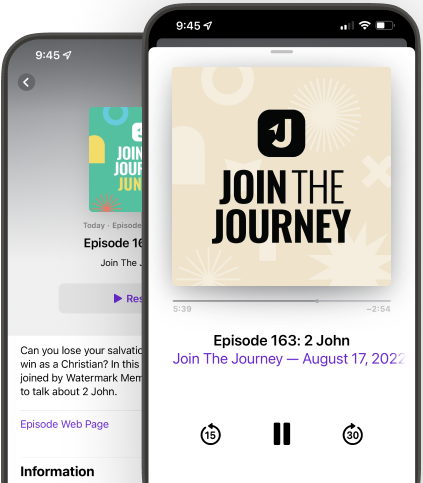
S4:308 Revelation 4-7
Listen NowDive Deeper | Revelation 4-7
Revelation 4 begins by inviting us into a heavenly perspective, as John writes about his vision of a door standing open to heaven. Looking back to Revelation 1:19, John gives us an outline of where we are going. Chapter 4 enters the final aspect of this idea.
We read about a voice calling out to John like a trumpet, and we get a clearer picture of what he is experiencing in Revelation 4:2. He is beholds a throne in heaven with One seated on the throne. It is evident that the throne is the main focus of what John sees and is at the center of his vision. This is significant because it is clearly a seat of authority and power.
Let's pause here and reflect on what this can mean in our own lives. Our world has been overcome by materialism that actively tells us that man sits on the throne of his own life. However, man is not the "One" that John is referring to here. This is a declaration of more than just the presence of God in heaven. It is a picture of God's reign. We cannot think rightly about this scene until we have recognized that there is a throne in heaven occupied by a sovereign God. He is the same God who speaks to us through his Word—the Bible—and actively reigns over everything.
In Revelation 5:5 we see that the Lion of Judah, who is Jesus Christ, is the only one who can open the scroll and break its seals. Revelation 5:9 explains that by his blood Jesus ransomed people to God from every tribe, language, people, and nation. Take heart, Christian! We get to stand before the throne on the basis of the blood of Christ that was poured out for you and me, as we are justified by faith (Romans 5:1). One day, we will rejoice with all the redeemed. What joy it is to be invited to live in deep anticipation and excitement, knowing that Jesus will win in the end!
This month's memory verse
"And he who was seated on the throne said, 'Behold, I am making all things new.' Also he said, 'Write this down, for these words are trustworthy and true.'"
– Revelation 21:5
Discussion Questions
1. This Christmas, what or who is currently sitting on the throne of your heart? Ask the Lord to call to mind and convict your heart of things that are not of him.
2. Reflect on how you are ransomed and justified through Jesus' blood. What is one way you can respond with gratitude today to the One who gave his life so that you might one day live eternally with him? (Romans 5:1)
3. Picture what it will look like for every tribe, language, people, and nation to one day bow before and worship our King. How can you take one step today toward making the earth look a bit more like heaven? Whom can you invite to surrender to, bow before, and worship the King of Kings? (Revelation 7:9)
4. How can you practically set your mind on things above today, knowing that God is the sovereign and eternal ruler? (Colossians 3:2)