November 24, 2025
What is 1 Corinthians about?
1 Corinthians 1-6

Emma Reid
Big Book Idea
The Church of Corinth was marked by dysfunction.
Key Verse | 1 Corinthians 2:14
The natural person does not accept the things of the Spirit of God, for they are folly to him, and he is not able to understand them because they are spiritually discerned.
1 Corinthians 1-6
Chapter 1
Greeting
1 Paul, called by the will of God to be an apostle of Christ Jesus, and our brother Sosthenes,
2 To the church of God that is in Corinth, to those sanctified in Christ Jesus, called to be saints together with all those who in every place call upon the name of our Lord Jesus Christ, both their Lord and ours:
3 Grace to you and peace from God our Father and the Lord Jesus Christ.
Thanksgiving
4 I give thanks to my God always for you because of the grace of God that was given you in Christ Jesus, 5 that in every way you were enriched in him in all speech and all knowledge— 6 even as the testimony about Christ was confirmed among you— 7 so that you are not lacking in any gift, as you wait for the revealing of our Lord Jesus Christ, 8 who will sustain you to the end, guiltless in the day of our Lord Jesus Christ. 9 God is faithful, by whom you were called into the fellowship of his Son, Jesus Christ our Lord.
Divisions in the Church
10 I appeal to you, brothers, 1 1:10 Or brothers and sisters. In New Testament usage, depending on the context, the plural Greek word adelphoi (translated “brothers”) may refer either to brothers or to brothers and sisters; also verses 11, 26 by the name of our Lord Jesus Christ, that all of you agree, and that there be no divisions among you, but that you be united in the same mind and the same judgment. 11 For it has been reported to me by Chloe's people that there is quarreling among you, my brothers. 12 What I mean is that each one of you says, “I follow Paul,” or “I follow Apollos,” or “I follow Cephas,” or “I follow Christ.” 13 Is Christ divided? Was Paul crucified for you? Or were you baptized in the name of Paul? 14 I thank God that I baptized none of you except Crispus and Gaius, 15 so that no one may say that you were baptized in my name. 16 (I did baptize also the household of Stephanas. Beyond that, I do not know whether I baptized anyone else.) 17 For Christ did not send me to baptize but to preach the gospel, and not with words of eloquent wisdom, lest the cross of Christ be emptied of its power.
Christ the Wisdom and Power of God
18 For the word of the cross is folly to those who are perishing, but to us who are being saved it is the power of God. 19 For it is written,
“I will destroy the wisdom of the wise,
and the discernment of the discerning I will thwart.”
20 Where is the one who is wise? Where is the scribe? Where is the debater of this age? Has not God made foolish the wisdom of the world? 21 For since, in the wisdom of God, the world did not know God through wisdom, it pleased God through the folly of what we preach 2 1:21 Or the folly of preaching to save those who believe. 22 For Jews demand signs and Greeks seek wisdom, 23 but we preach Christ crucified, a stumbling block to Jews and folly to Gentiles, 24 but to those who are called, both Jews and Greeks, Christ the power of God and the wisdom of God. 25 For the foolishness of God is wiser than men, and the weakness of God is stronger than men.
26 For consider your calling, brothers: not many of you were wise according to worldly standards, 3 1:26 Greek according to the flesh not many were powerful, not many were of noble birth. 27 But God chose what is foolish in the world to shame the wise; God chose what is weak in the world to shame the strong; 28 God chose what is low and despised in the world, even things that are not, to bring to nothing things that are, 29 so that no human being 4 1:29 Greek no flesh might boast in the presence of God. 30 And because of him 5 1:30 Greek And from him you are in Christ Jesus, who became to us wisdom from God, righteousness and sanctification and redemption, 31 so that, as it is written, “Let the one who boasts, boast in the Lord.”
Chapter 2
Proclaiming Christ Crucified
1 And I, when I came to you, brothers, 6 2:1 Or brothers and sisters did not come proclaiming to you the testimony 7 2:1 Some manuscripts mystery (or secret) of God with lofty speech or wisdom. 2 For I decided to know nothing among you except Jesus Christ and him crucified. 3 And I was with you in weakness and in fear and much trembling, 4 and my speech and my message were not in plausible words of wisdom, but in demonstration of the Spirit and of power, 5 so that your faith might not rest in the wisdom of men 8 2:5 The Greek word anthropoi can refer to both men and women but in the power of God.
Wisdom from the Spirit
6 Yet among the mature we do impart wisdom, although it is not a wisdom of this age or of the rulers of this age, who are doomed to pass away. 7 But we impart a secret and hidden wisdom of God, which God decreed before the ages for our glory. 8 None of the rulers of this age understood this, for if they had, they would not have crucified the Lord of glory. 9 But, as it is written,
“What no eye has seen, nor ear heard,
nor the heart of man imagined,
what God has prepared for those who love him”—
10 these things God has revealed to us through the Spirit. For the Spirit searches everything, even the depths of God. 11 For who knows a person's thoughts except the spirit of that person, which is in him? So also no one comprehends the thoughts of God except the Spirit of God. 12 Now we have received not the spirit of the world, but the Spirit who is from God, that we might understand the things freely given us by God. 13 And we impart this in words not taught by human wisdom but taught by the Spirit, interpreting spiritual truths to those who are spiritual. 9 2:13 Or interpreting spiritual truths in spiritual language, or comparing spiritual things with spiritual
14 The natural person does not accept the things of the Spirit of God, for they are folly to him, and he is not able to understand them because they are spiritually discerned. 15 The spiritual person judges all things, but is himself to be judged by no one. 16 “For who has understood the mind of the Lord so as to instruct him?” But we have the mind of Christ.
Chapter 3
Divisions in the Church
1 But I, brothers, 10 3:1 Or brothers and sisters could not address you as spiritual people, but as people of the flesh, as infants in Christ. 2 I fed you with milk, not solid food, for you were not ready for it. And even now you are not yet ready, 3 for you are still of the flesh. For while there is jealousy and strife among you, are you not of the flesh and behaving only in a human way? 4 For when one says, “I follow Paul,” and another, “I follow Apollos,” are you not being merely human?
5 What then is Apollos? What is Paul? Servants through whom you believed, as the Lord assigned to each. 6 I planted, Apollos watered, but God gave the growth. 7 So neither he who plants nor he who waters is anything, but only God who gives the growth. 8 He who plants and he who waters are one, and each will receive his wages according to his labor. 9 For we are God's fellow workers. You are God's field, God's building.
10 According to the grace of God given to me, like a skilled 11 3:10 Or wise master builder I laid a foundation, and someone else is building upon it. Let each one take care how he builds upon it. 11 For no one can lay a foundation other than that which is laid, which is Jesus Christ. 12 Now if anyone builds on the foundation with gold, silver, precious stones, wood, hay, straw— 13 each one's work will become manifest, for the Day will disclose it, because it will be revealed by fire, and the fire will test what sort of work each one has done. 14 If the work that anyone has built on the foundation survives, he will receive a reward. 15 If anyone's work is burned up, he will suffer loss, though he himself will be saved, but only as through fire.
16 Do you not know that you 12 3:16 The Greek for you is plural in verses 16 and 17 are God's temple and that God's Spirit dwells in you? 17 If anyone destroys God's temple, God will destroy him. For God's temple is holy, and you are that temple.
18 Let no one deceive himself. If anyone among you thinks that he is wise in this age, let him become a fool that he may become wise. 19 For the wisdom of this world is folly with God. For it is written, “He catches the wise in their craftiness,” 20 and again, “The Lord knows the thoughts of the wise, that they are futile.” 21 So let no one boast in men. For all things are yours, 22 whether Paul or Apollos or Cephas or the world or life or death or the present or the future—all are yours, 23 and you are Christ's, and Christ is God's.
Chapter 4
The Ministry of Apostles
1 This is how one should regard us, as servants of Christ and stewards of the mysteries of God. 2 Moreover, it is required of stewards that they be found faithful. 3 But with me it is a very small thing that I should be judged by you or by any human court. In fact, I do not even judge myself. 4 For I am not aware of anything against myself, but I am not thereby acquitted. It is the Lord who judges me. 5 Therefore do not pronounce judgment before the time, before the Lord comes, who will bring to light the things now hidden in darkness and will disclose the purposes of the heart. Then each one will receive his commendation from God.
6 I have applied all these things to myself and Apollos for your benefit, brothers, 13 4:6 Or brothers and sisters that you may learn by us not to go beyond what is written, that none of you may be puffed up in favor of one against another. 7 For who sees anything different in you? What do you have that you did not receive? If then you received it, why do you boast as if you did not receive it?
8 Already you have all you want! Already you have become rich! Without us you have become kings! And would that you did reign, so that we might share the rule with you! 9 For I think that God has exhibited us apostles as last of all, like men sentenced to death, because we have become a spectacle to the world, to angels, and to men. 10 We are fools for Christ's sake, but you are wise in Christ. We are weak, but you are strong. You are held in honor, but we in disrepute. 11 To the present hour we hunger and thirst, we are poorly dressed and buffeted and homeless, 12 and we labor, working with our own hands. When reviled, we bless; when persecuted, we endure; 13 when slandered, we entreat. We have become, and are still, like the scum of the world, the refuse of all things.
14 I do not write these things to make you ashamed, but to admonish you as my beloved children. 15 For though you have countless 14 4:15 Greek you have ten thousand guides in Christ, you do not have many fathers. For I became your father in Christ Jesus through the gospel. 16 I urge you, then, be imitators of me. 17 That is why I sent 15 4:17 Or am sending you Timothy, my beloved and faithful child in the Lord, to remind you of my ways in Christ, 16 4:17 Some manuscripts add Jesus as I teach them everywhere in every church. 18 Some are arrogant, as though I were not coming to you. 19 But I will come to you soon, if the Lord wills, and I will find out not the talk of these arrogant people but their power. 20 For the kingdom of God does not consist in talk but in power. 21 What do you wish? Shall I come to you with a rod, or with love in a spirit of gentleness?
Chapter 5
Sexual Immorality Defiles the Church
1 It is actually reported that there is sexual immorality among you, and of a kind that is not tolerated even among pagans, for a man has his father's wife. 2 And you are arrogant! Ought you not rather to mourn? Let him who has done this be removed from among you.
3 For though absent in body, I am present in spirit; and as if present, I have already pronounced judgment on the one who did such a thing. 4 When you are assembled in the name of the Lord Jesus and my spirit is present, with the power of our Lord Jesus, 5 you are to deliver this man to Satan for the destruction of the flesh, so that his spirit may be saved in the day of the Lord. 17 5:5 Some manuscripts add Jesus
6 Your boasting is not good. Do you not know that a little leaven leavens the whole lump? 7 Cleanse out the old leaven that you may be a new lump, as you really are unleavened. For Christ, our Passover lamb, has been sacrificed. 8 Let us therefore celebrate the festival, not with the old leaven, the leaven of malice and evil, but with the unleavened bread of sincerity and truth.
9 I wrote to you in my letter not to associate with sexually immoral people— 10 not at all meaning the sexually immoral of this world, or the greedy and swindlers, or idolaters, since then you would need to go out of the world. 11 But now I am writing to you not to associate with anyone who bears the name of brother if he is guilty of sexual immorality or greed, or is an idolater, reviler, drunkard, or swindler—not even to eat with such a one. 12 For what have I to do with judging outsiders? Is it not those inside the church 18 5:12 Greek those inside whom you are to judge? 13 God judges 19 5:13 Or will judge those outside. “Purge the evil person from among you.”
Chapter 6
Lawsuits Against Believers
1 When one of you has a grievance against another, does he dare go to law before the unrighteous instead of the saints? 2 Or do you not know that the saints will judge the world? And if the world is to be judged by you, are you incompetent to try trivial cases? 3 Do you not know that we are to judge angels? How much more, then, matters pertaining to this life! 4 So if you have such cases, why do you lay them before those who have no standing in the church? 5 I say this to your shame. Can it be that there is no one among you wise enough to settle a dispute between the brothers, 6 but brother goes to law against brother, and that before unbelievers? 7 To have lawsuits at all with one another is already a defeat for you. Why not rather suffer wrong? Why not rather be defrauded? 8 But you yourselves wrong and defraud—even your own brothers! 20 6:8 Or brothers and sisters
9 Or do you not know that the unrighteous 21 6:9 Or wrongdoers will not inherit the kingdom of God? Do not be deceived: neither the sexually immoral, nor idolaters, nor adulterers, nor men who practice homosexuality, 22 6:9 The two Greek terms translated by this phrase refer to the passive and active partners in consensual homosexual acts 10 nor thieves, nor the greedy, nor drunkards, nor revilers, nor swindlers will inherit the kingdom of God. 11 And such were some of you. But you were washed, you were sanctified, you were justified in the name of the Lord Jesus Christ and by the Spirit of our God.
Flee Sexual Immorality
12 “All things are lawful for me,” but not all things are helpful. “All things are lawful for me,” but I will not be dominated by anything. 13 “Food is meant for the stomach and the stomach for food”—and God will destroy both one and the other. The body is not meant for sexual immorality, but for the Lord, and the Lord for the body. 14 And God raised the Lord and will also raise us up by his power. 15 Do you not know that your bodies are members of Christ? Shall I then take the members of Christ and make them members of a prostitute? Never! 16 Or do you not know that he who is joined 23 6:16 Or who holds fast (compare Genesis 2:24 and Deuteronomy 10:20); also verse 17 to a prostitute becomes one body with her? For, as it is written, “The two will become one flesh.” 17 But he who is joined to the Lord becomes one spirit with him. 18 Flee from sexual immorality. Every other sin 24 6:18 Or Every sin a person commits is outside the body, but the sexually immoral person sins against his own body. 19 Or do you not know that your body is a temple of the Holy Spirit within you, whom you have from God? You are not your own, 20 for you were bought with a price. So glorify God in your body.
Footnotes
[1] 1:10 Or brothers and sisters. In New Testament usage, depending on the context, the plural Greek word adelphoi (translated “brothers”) may refer either to brothers or to brothers and sisters; also verses 11, 26[2] 1:21 Or the folly of preaching
[3] 1:26 Greek according to the flesh
[4] 1:29 Greek no flesh
[5] 1:30 Greek And from him
[6] 2:1 Or brothers and sisters
[7] 2:1 Some manuscripts mystery (or secret)
[8] 2:5 The Greek word anthropoi can refer to both men and women
[9] 2:13 Or interpreting spiritual truths in spiritual language, or comparing spiritual things with spiritual
[10] 3:1 Or brothers and sisters
[11] 3:10 Or wise
[12] 3:16 The Greek for you is plural in verses 16 and 17
[13] 4:6 Or brothers and sisters
[14] 4:15 Greek you have ten thousand
[15] 4:17 Or am sending
[16] 4:17 Some manuscripts add Jesus
[17] 5:5 Some manuscripts add Jesus
[18] 5:12 Greek those inside
[19] 5:13 Or will judge
[20] 6:8 Or brothers and sisters
[21] 6:9 Or wrongdoers
[22] 6:9 The two Greek terms translated by this phrase refer to the passive and active partners in consensual homosexual acts
[23] 6:16 Or who holds fast (compare Genesis 2:24 and Deuteronomy 10:20); also verse 17
[24] 6:18 Or Every sin
Table of Contents
Introduction to 1 Corinthians
Timeline

Author, Date, and Recipients
The apostle Paul wrote this letter to the Corinthian church in the spring of A.D. 53, 54, or 55. This was near the end of his three-year ministry in Ephesus. Altogether Paul wrote four letters to this church: (1) the previous letter mentioned in 1 Corinthians 5:9; (2) 1 Corinthians; (3) the tearful, severe letter mentioned in 2 Corinthians 2:3–4; and (4) 2 Corinthians. Only 1 and 2 Corinthians have survived.
Theme
The Corinthian church, divided because of the arrogance of its more powerful members, should work together for the advancement of the gospel. They should repent of their rivalries, build up the faith of those who are weak, and witness effectively to unbelievers.
Purpose
Paul received an oral report and a letter from the Corinthian church. These revealed a church struggling with division, immorality, idolatry, and theological confusion. He wrote them this letter so that they would become a true dwelling place for God’s Spirit (3:12, 16), stay faithful to the gospel, and be “guiltless in the day of our Lord Jesus Christ” (1:8).
Key Themes
- The church is the dwelling place of God’s Spirit. Thus, the people who make up the church should work for unity by building each other up (1:10–4:21, especially 3:10–16; 14:12).
- Christians should build up the church in four practical ways:
a. they should be sensitive to those with fragile faith (8:1–9:18; 10:28, 33).
b. they should win unbelievers to the faith (9:19–23; 10:27, 32–33).
c. they should conduct worship services in such a way that unbelievers might come to faith (14:16, 23–25).
d. their corporate worship should use spiritual gifts not out of personal pride, or for evaluating who has the better gift, but to build up the church (11:2–16; 12:12–30; 14:1–35).
- Sexual relations form a union between man and woman as deep as the union of the believer with Christ. Therefore sexual activity should be confined to marriage (5:1–13; 6:12–20; 7:5, 9, 36).
- Baptism and the Lord’s Supper are important. Yet both are less important than personal trust in the gospel and living in the way God commands (1:14–17; 10:1–5; 11:17–34; 15:29–34).
- The bodily resurrection of Jesus (and of his followers) from the dead is a key truth of the Christian faith (6:14; 15:1–58).
Outline
- Introduction to the Letter’s Main Themes (1:1–9)
- Divisions over Christian Preachers (1:10–4:21)
- A Report of Sexual Immorality and Lawsuits (5:1–6:20)
- Three Issues from the Corinthians’ Letter (7:1–11:1)
- Divisions over Corporate Worship (11:2–14:40)
- The Futility of Faith If the Dead Are Not Raised (15:1–58)
- The Collection for the Saints and Travel Plans (16:1–12)
- Closing Admonitions and Greetings (16:13–24)
The Setting of 1 Corinthians
c. A.D. 53–55
Paul wrote 1 Corinthians during his third missionary journey, near the end of his three-year ministry in Ephesus (Acts 19:21–22). Both Corinth and Ephesus were wealthy port cities steeped in pagan idolatry and philosophy. Corinth benefited both militarily and economically from its strategic location at one end of the isthmus that connected the southern Greek peninsula to the mainland.

Fact: The wisdom of men and the power of God
The wisdom of men and the power of God. Mere intellectual persuasion does not save people. Saving faith is produced by the heart-changing power of the Holy Spirit as the gospel is proclaimed (2:5).
Fact: pastoral letter
First Corinthians is a pastoral letter to a spiritually troubled church. Paul deeply loved the church at Corinth, but he was distressed by some of the behavior prevalent among its members. He wrote to the Corinthians to address such issues as the relationship between Christians and the surrounding culture, divisions within the church, and matters of personal morality.
Fact: The Lord returns to his temple
The Lord returns to his temple. Because of the people’s rebellion, the glory of the Lord departed from the temple in Ezekiel’s vision (10:18–22). But later Ezekiel has a vision in which God returns to the temple (43:1–5), beginning a new era in his relationship with his people. In the NT, the apostle Paul teaches that those who believe in Christ are the “temple” in which God is pleased to dwell (1 Cor. 3:16).
Fact: Apollos
Apollos (1:12) was a Jew from the city of Alexandria. He was “an eloquent man, competent in the Scriptures” (Acts 18:24). At Ephesus, Aquila and Priscilla helped Apollos to better understand the gospel. From Ephesus he traveled on to Corinth, where the church benefited greatly from his teaching (1 Cor. 3:6).
Fact: What is a “steward”?
What is a “steward”? A steward (4:1–2) is someone who serves as an administrator or overseer of something that belongs to someone else. All that we possess ultimately belongs to God. Because of this, everything he has given to us during our time on earth must be managed with great care. This includes our finances, possessions, time, and gifts.
Fact: Leaven
Leaven is fermented or soured dough that is added in small amounts to a larger portion in order to make it rise. In the NT, leaven often symbolizes sin that goes undisciplined or unchecked and thus negatively affects the church as a whole (5:6–8).
Fact: The greatest is love
The greatest is love. Jesus said that Christians should be famous for their love for each other (John 13:34–35), but the Corinthian church was becoming known for its divisions and arguments (see 1 Cor. 3:3; 6:1; 11:18). Paul tells them what Christian love should look like (ch. 13).
Fact: Rahab
Rahab is a remarkable example of the fact that God can use whomever he chooses to accomplish his will (1 Cor. 1:26–31). Though a prostitute and a Gentile, Rahab is listed in the genealogy of Jesus (Matt. 1:5). She is remembered as a model of faith completed in works (James 2:25) and is listed among the heroes of faith in Hebrews 11.
The Setting of 2 Corinthians
c. A.D. 55–56
Paul wrote 2 Corinthians from Macedonia a year or so after writing 1 Corinthians, during his third missionary journey. He had just finished his three-year ministry in Ephesus and was visiting the churches in Macedonia as he made his way to Corinth. In Macedonia he met Titus, who had returned from Corinth with news about the church there.

The Setting of 1 Corinthians
c. A.D. 53–55
Paul wrote 1 Corinthians during his third missionary journey, near the end of his three-year ministry in Ephesus (Acts 19:21–22). Both Corinth and Ephesus were wealthy port cities steeped in pagan idolatry and philosophy. Corinth benefited both militarily and economically from its strategic location at one end of the isthmus that connected the southern Greek peninsula to the mainland.
New Testament Timeline
The following chart provides a detailed New Testament timeline. Most of the dates can be determined precisely by correlating biblical events with extensive historical documents and archaeological evidence. Dates with an asterisk denote approximate or alternative dates. The extensive external confirmation of New Testament dates and events encourages great confidence in the truth and historicity of both the Old and New Testaments.
| 5 B.C.* | Jesus is born in Bethlehem. |
| 4 B.C. | Jesus’ family flees to Egypt to escape from Herod’s plan to kill Jesus (Matt. 2:13–18); Herod dies; Judas (of Sepphoris) and others rebel, requiring the Syrian Governor Varus to intervene throughout Palestine; Sepphoris, a city four miles from Nazareth, is destroyed by Roman soldiers; Judea, Samaria, and Idumea are given to Herod’s son, Archelaus; Galilee and Perea are given to his son Antipas; Jesus’ family, after returning from Egypt, resides in Nazareth (Matt. 2:19–23), a small village in southern Galilee. |
| A.D. 6 | Archelaus is exiled for incompetence; Judea becomes a Roman province; Judas the Galilean (of Gamla) leads a revolt against the tax census; the governor of Syria, Quirinius (A.D. 6–7), appoints Annas high priest (6–15). |
| 8* | Jesus (age 12) interacts with the teachers in the temple (Luke 2:41–50). |
| 8*–28/30 | Jesus works as a carpenter in Nazareth (Matt. 13:55; Mark 6:3) and probably in neighboring villages and Sepphoris, which was being rebuilt. |
| 28–29* | John the Baptist begins his ministry around the Jordan River (John 1:19). |
| 28–30* | Jesus begins his ministry in Judea, but soon focuses his efforts in Galilee. In Jerusalem, Pharisees (like Gamaliel) train disciples (like Paul) in their tradition. They send a delegation to Galilee, but the delegation rejects Jesus’ teaching. In Alexandria, Philo (20 B.C.–A.D. 50) attempts to unify Greek philosophy with Hebrew Scripture. |
| 33 (or 30) | Jesus returns to Judea, is crucified, and resurrected. James the brother of Jesus becomes a believer after witnessing the resurrected Jesus (1 Cor. 15:7; Acts 12:17). Jesus ascends to the Father’s right hand (Acts 1). Jesus’ first followers receive the Holy Spirit at Pentecost and begin to proclaim the gospel (Acts 2). |
| 33/34* | Paul witnesses the resurrected Lord on the way to Damascus and is commissioned as an apostle to the nations (Acts 9; Gal. 1:15–16). |
| 34–37 | Paul ministers in Damascus and Arabia (Acts 9:19–22; 26:20; Gal. 1:16–18). |
| 36 | Pilate loses his position for incompetence. |
| 36/37* | Paul meets with Peter in Jerusalem (Acts 9:26–30; Gal. 1:18). |
| 37–45 | Paul ministers in Syria, Tarsus, and Cilicia (Acts 9:30; Gal. 1:21). |
| 38* | Peter witnesses to Cornelius (Acts 10). |
| 39 | Antipas is exiled. |
| 40–45* | James writes his letter to believers outside Palestine (see James 1:1). |
| 41–44 | Agrippa, Herod the Great’s grandson, rules Palestine; he kills James the brother of John (Acts 12:2) and imprisons Peter (Acts 12:3). |
| 42–44 | Paul receives his “thorn in the flesh” (2 Cor. 12:7). |
| 44 | Peter leaves Jerusalem; Agrippa is killed by an “angel of the Lord” (Acts 12:23). |
| 44–46 | Theudas persuades many Jews to sell their possessions and follow him into the wilderness where he claimed he would miraculously divide the Jordan River; Roman procurator Fadus dispatches his cavalry and beheads the would-be messiah. |
| 44–47* | Paul’s Second Visit to Jerusalem; time of famine (Acts 11:27–30; Gal. 2:1–10). |
| 46–47 | Paul’s First Missionary Journey (with Barnabas) from Antioch to Cyprus, Antioch in Pisidia, Iconium, and Lystra (Acts 13:4–14:26). |
| 46–48 | Roman procurator Tiberius Alexander crucifies two sons (Jacob and Simon) of Judas the Galilean. |
| 48* | Paul writes Galatians, perhaps from Antioch (see Acts 14:26–28). |
| 48–49* | Paul and Peter return to Jerusalem for the Apostolic Council, which, with the assistance of James, frees Gentile believers from the requirement of circumcision in opposition to Pharisaic believers (Acts 15:1–29); Paul and Barnabas return to Antioch (Acts 15:30) but split over a dispute about John Mark (Acts 15:36–40). |
| 48/49–51* | Paul’s Second Missionary Journey (with Silas) from Antioch to Syria, Cilicia, southern Galatia, Macedonia, notably Philippi, Thessalonica, and Berea; and then on to Achaia, notably Athens and Corinth (Acts 15:36–18:22). |
| 49 | Claudius expels Jews from Rome because of conflicts about Jesus (Acts 18:2); Paul befriends two refugees, Priscilla and Aquila, in Corinth (Acts 18:2–3). |
| 49–51* | Paul writes 1–2 Thessalonians from Corinth (Acts 18:1, 11; also compare Acts 18:5 with 1 Thess. 1:8). |
| 51 | Paul appears before Gallio, proconsul of Achaia (Acts 18:12–17). |
| 50–54* | Peter comes to Rome. |
| 52–57* | Paul’s Third Missionary Journey from Antioch to Galatia, Phrygia, Ephesus, Macedonia, Greece (Acts 18:23–21:17). |
| 52–55 | Paul ministers in Ephesus (Acts 19:1–20). |
| 53–55* | Mark writes his Gospel, containing Peter’s memories of Jesus; perhaps within a decade, Matthew publishes his Gospel, which relies on Mark and other sources. Paul writes 1 Corinthians from Ephesus (Acts 19:10). |
| 54 | Claudius dies (edict exiling Jews repealed); Priscilla and Aquila return to Rome and host a church in their home (see Rom. 16:3–5). |
| 54–68 | Nero reigns. |
| 55–56* | Paul writes 2 Corinthians from Macedonia (Acts 20:1, 3; 2 Cor. 1:16; 2:13; 7:5; 8:1; 9:2, 4; see 1 Cor. 16:5). |
| 57* | Paul winters in Corinth and writes Romans (Acts 20:3; see Rom. 16:1–2; also see Rom. 16:23 with 1 Cor. 1:14); travels to Jerusalem (Acts 21:1–16), visits with James the brother of Jesus (Acts 21:17–26), and is arrested (Acts 21:27–36; 22:22–29). |
| 57–59 | Paul is imprisoned and transferred to Caesarea (Acts 23:23–24, 33–34). |
| 60 | Paul begins voyage to Rome (Acts 27:1–2); he is shipwrecked for three months on the island of Malta (Acts 27:39–28:10). |
| 60–70* | Letter to the Hebrews is written. |
| 62 | James the brother of the Lord is executed by the Sadducean high priest Ananus. |
| 62–63* | Peter writes his first letter (1 Peter) from Rome (1 Pet. 5:13). |
| 62* | Paul arrives in Rome and remains under house arrest (Acts 28:16–31); he writes Ephesians (see verses for Colossians), Philippians (Phil. 1:7, 13, 17; 4:22), Colossians (Col. 4:3, 10, 18; see Acts 27:2 with Col. 4:10), Philemon (see Philem. 23 with Col. 1:7; Philem. 2 with Col. 4:17; Philem. 24 with Col. 4:10; also see Col. 4:9). Luke, Paul’s physician and companion (see Col. 4:14), writes Luke and Acts. |
| 62–64 | Paul is released, extends his mission (probably reaching Spain), writes 1 Timothy from Macedonia (see 1 Tim. 1:3) and Titus from Nicopolis (Titus 3:12); he is rearrested in Rome (2 Tim. 1:16–17). |
| 63–64 | Work on the temple complex is completed. |
| 64 (July 19) | Fire in Rome; Nero blames and kills many Christians. |
| 64–67* | Peter writes his second letter ( 2 Peter). Jude writes his letter. Paul writes 2 Timothy (see 2 Tim. 4:6–8). Paul and Peter are martyred in Rome. |
| 66 | First Jewish-Roman War begins with a riot between Greeks and Jews at Caesarea; Roman procurator Gesius Florus (A.D. 64–66) is murdered and a Roman garrison wiped out; Menahem, son or grandson of Judas the Galilean, murders the high priest Ananias and seizes control of the temple; Nero dispatches Vespasian with three legions. |
| 67* | Romans destroy the Qumran community, who beforehand hid the so-called Dead Sea Scrolls in nearby caves; the church in Jerusalem flees to Pella (Matt. 24:15–16; Mark 13:14; Luke 21:20–22); John migrates to Ephesus with Mary, Jesus’ mother. |
| 68 | Nero commits suicide; year of the three emperors. |
| 69 | Rebellion quelled in Galilee and Samaria; Vespasian summoned back to Rome to become emperor. |
| 70 (Aug. 30) | Titus, Vespasian’s son, after a five-month siege of Jerusalem, destroys the temple after desecrating it; the temple’s menorah, Torah, and veil are removed and later put on display in a victory parade in Rome; the influence of the Sadducees ends; the Pharisee Johanan ben Zakkai escapes and convinces the Romans to allow him and others to settle in Jamnia, where they found a school. |
| 73 (May 2)* | Before Roman general Silva breaches the fortress atop Masada following a two-year siege, 936 Jewish rebels commit suicide. |
| 75 | Titus has an affair with the Jewish princess Berenice, sister of Agrippa II (Acts 25:13, 23), whom he later abandons because of the scandal. |
| 77 | Pliny the Elder writes Natural History. |
| 77–78 | Josephus publishes Jewish War in Rome. |
| 79 | Pompeii and Herculaneum are destroyed by eruption of Vesuvius; Pliny the Elder dies attempting to investigate. |
| 81 | The Arch of Titus, celebrating his destruction of the temple, is erected in Rome. |
| 81–96 | Domitian, Titus’s brother, persecutes Christians among the Roman nobility, including his own relatives Clemens and Domitilla. |
| 85–95* | John writes his letters (1–3 John), probably in Ephesus. |
| 89–95* | John writes his Gospel, probably in Ephesus. |
| 93–94 | Josephus publishes Jewish Antiquities in Rome. |
| 94 | Domitian exiles philosophers from Rome. |
| 95* | Amidst persecution, Clement, a leader in the Roman church, writes his Letter to the Corinthians (1 Clement) appealing for peace between the young men and elders. |
| 95–96* | Exiled by Domitian to Patmos, John writes Revelation (Rev. 1:9). |
| 96–98 | Nerva, the first of five “good” emperors, ends official persecution. |
* denotes approximate date; / signifies either/or
Major Events in the Life of the Apostle Paul
| A.D. 5–10? | Born in Tarsus, an Israelite from the tribe of Benjamin and a Roman citizen (Acts 22:3, 28; Rom. 11:1; Phil. 3:5); raised in either Jerusalem (Acts 22:3?) or Tarsus |
| 15–20? | Trained as a Pharisee by Gamaliel I (Acts 22:3; 26:5; Gal. 1:14; Phil. 3:5–6) |
| 30/33? | Death, resurrection of Christ |
| 31–34 | Present at Stephen’s stoning; persecuted Christians (Acts 7:58; 8:1; 22:4a; 26:9–11; 1 Cor. 15:9; Gal. 1:13; Phil. 3:6) |
| 33/34* | Converted, called, and commissioned on the way to Damascus (Acts 9:1–19; 22:6–11; 26:12–18; Gal. 1:15–16) |
| 33/34–36/37 | Stays in Damascus a short time (Acts 9:19b); leaves for Arabia (2 Cor. 11:32; Gal. 1:17); returns to Damascus (Gal. 1:17; Acts 9:20–22?); escapes through city wall to avoid arrest (Acts 9:23–24; 2 Cor. 11:32–33) |
| 36/37* | Meets with Peter, sees James, in Jerusalem (Acts 9:26–30; Gal. 1:18) Hellenists seek to kill him; flees to Tarsus (Acts 9:28–30; Gal. 1:21) |
| 37–45 | Ministers in Syria/Cilicia (2 Cor. 11:22–27?) |
| 44–47* | Ministers with Barnabas in Antioch (Acts 11:25–26) Second Visit to Jerusalem; time of famine (Acts 11:27–30; Gal. 2:1–10) |
| 46–47 | First Missionary Journey (Acts 13:4–14:26): 1.5 years? |
| 48* | With Barnabas, spends “no little time” in Antioch (Acts 14:28; Gal. 2:11–14); writes Galatians |
| 48–49* | Returns to Jerusalem for the apostolic council (Acts 15); Paul and Barnabas return to Antioch (Acts 15:30–33), but dispute over John Mark causes them to part ways (Acts 15:36–41) |
| 48/49–51* | Second Missionary Journey (Acts 15:36–18:22): 2.5 years? |
| 49 | Paul and Silas travel to southern Galatia through Asia Minor, on to Macedonia (Philippi [1 Thess. 2:2]); Thessalonica [1 Thess. 2:2; Phil. 4:15–16]; and Berea [Acts 17:10–15]), and then to Achaia (Athens [1 Thess. 3:1] and Corinth [2 Cor. 11:7–9]) |
| 49–51* | Spends 1.5 years in Corinth (Acts 18:11); appears before Gallio (Acts 18:12–17); writes 1 and 2 Thessalonians |
| 51 | Returns to Jerusalem? (Acts 18:22) |
| 52–57* | Third Missionary Journey (Acts 18:23–21:17): 5 years? |
| 52 | Travels to Antioch, spends “some time”; travels through Galatia and Phrygia (Acts 18:23) |
| 52–55 | Arrives in Ephesus (Acts 19:1; 1 Cor. 16:8); ministers for three years (Acts 20:31) and writes 1 Corinthians; makes brief, “painful visit” to Corinth (2 Cor. 2:1), then returns to Ephesus and writes “severe letter” (now lost) to Corinth (2 Cor. 2:3–4; 7:8–16) |
| 55–56* | Travels north to Macedonia, meets Titus (Acts 20:1; 2 Cor. 2:12–13); writes 2 Corinthians |
| 57* | Winters in Corinth (Acts 20:2–3; 2 Cor. 9:4), writes to the Romans from Corinth; travels to Jerusalem; is arrested (Acts 21:27–36) |
| 57–59 | Transferred as prisoner to Caesarea, stays for two years (Acts 24:27) |
| 60* | Voyage to Rome; shipwrecked, spends three months on Malta (Acts 28:11); finally arrives in Rome |
| 62* | Under house-arrest in Rome (Acts 28:30–31), writes Ephesians, Philippians, Colossians, Philemon |
| 62–67 | Released from house-arrest in Rome, travels to Spain (?), writes 1 Timothy (from Macedonia?) and Titus (from Nicopolis); is rearrested, writes 2 Timothy from Rome, is martyred |
* denotes approximate date; / signifies either/or
The Epistles
| Book | Author | Date | Recipients | Place of Writing |
|---|---|---|---|---|
| James | James | 40–45 | Jewish Christians in or near Palestine | Jerusalem? |
| Galatians | Paul | 48 | South Galatian churches | Syrian Antioch |
| 1 Thessalonians | Paul | 49–51 | Church in Thessalonica | Corinth |
| 2 Thessalonians | Paul | 49–51 | Church in Thessalonica | Corinth |
| 1 Corinthians | Paul | 53–55 | Church in Corinth | Ephesus |
| 2 Corinthians | Paul | 55–56 | Church in Corinth | Macedonia |
| Romans | Paul | 57 | Church in Rome | Corinth |
| Philippians | Paul | 62 | Church in Philippi | Rome |
| Colossians | Paul | 62 | Church in Colossae | Rome |
| Philemon | Paul | 62 | Philemon | Rome |
| Ephesians | Paul | 62 | Churches in Asia Minor (circular letter?) | Rome |
| 1 Timothy | Paul | 62–64 | Timothy | Macedonia? |
| Titus | Paul | 62–64 | Titus | Nicopolis |
| 1 Peter | Peter | 62–63 | Churches in Roman provinces in Asia Minor | Rome |
| 2 Peter | Peter | 64–67 | Churches in Roman provinces in Asia Minor? | Rome |
| 2 Timothy | Paul | 64–67 | Timothy | Rome |
| Jude | Jude | Mid–60s | Jewish Christians in Egypt? Asia Minor? Antioch? | Unknown |
| Hebrews | Unknown | 60–70 | Jewish Christians in Rome or in or near Palestine | Unknown |
| 1 John | John | 85–95 | Churches near Ephesus? | Ephesus |
| 2 John | John | 85–95 | Church or churches near Ephesus | Ephesus |
| 3 John | John | 85–95 | Gaius | Ephesus |
Imitating Paul as Paul Imitates Christ
| 1 Cor. 4:15–17 | I became your father in Christ Jesus . . . be imitators of me. That is why I sent you Timothy, my beloved and faithful child in the Lord, to remind you of my ways in Christ. |
| 1 Cor. 10:32–11:1 | Give no offense . . . just as I try to please everyone in everything . . . Be imitators of me, as I am of Christ. |
| Phil. 3:17 | Brothers, join in imitating me, and keep your eyes on those who walk according to the example you have in us. |
| Phil. 4:9 | What you have learned and received and heard and seen in me—practice these things. |
| 2 Thess. 3:7–9 | You yourselves know how you ought to imitate us . . . but to give you in ourselves an example to imitate. |
| 2 Tim. 3:10–11 | You . . . have followed my teaching, my conduct, my aim in life, my faith, my patience, my love, my steadfastness, my persecutions and sufferings. |
Church Leaders Should Likewise Lead Lives That Are Examples to Imitate
| Phil. 3:17 | Brothers, join in imitating me, and keep your eyes on those who walk according to the example you have in us. |
| 1 Tim. 4:12 | Let no one despise you for your youth, but set the believers an example in speech, in conduct, in love, in faith, in purity. |
| Titus 2:7–8 | Show yourself in all respects to be a model of good works, and in your teaching show integrity, dignity, and sound speech. |
| Heb. 13:7 | Remember your leaders, those who spoke to you the word of God. Consider the outcome of their way of life, and imitate their faith. |
| 1 Pet. 5:2–3 | Shepherd the flock of God . . . not domineering over those in your charge, but being examples to the flock. |
Weakness and Power (or Strength) in 1–2 Corinthians
| Verse | Weakness | Power (or Strength) |
|---|---|---|
| 1 Cor. 1:25 | the weakness of God | is stronger than men |
| 1 Cor. 1:27 | God chose what is weak | to shame the strong |
| 1 Cor. 2:3, 5 | in weakness and in fear | but in the power of God |
| 1 Cor. 15:43 | sown in weakness | raised in power |
| 2 Cor. 12:9 | I will boast . . . of my weaknesses | so that the power of Christ may rest upon me |
| 2 Cor. 13:3 | not weak in dealing with you | but . . . powerful among you |
| 2 Cor. 13:4 | he was crucified in weakness | but lives by the power of God |
| 2 Cor. 13:4 | we also are weak in him | but . . . live with him by the power of God |
| 2 Cor. 13:9 | we are glad when we are weak | and you are strong |
1 Cor. 1:1 On apostle, see notes on Matt. 10:2; Rom. 1:1. The word occurs in 1 Corinthians more often than in any other of Paul’s letters.
Fact: Apollos
Apollos (1:12) was a Jew from the city of Alexandria. He was “an eloquent man, competent in the Scriptures” (Acts 18:24). At Ephesus, Aquila and Priscilla helped Apollos to better understand the gospel. From Ephesus he traveled on to Corinth, where the church benefited greatly from his teaching (1 Cor. 3:6).
1 Cor. 1:2 sanctified . . . saints. These two words are closely related in Greek. One is a verb meaning “make holy” and the other an adjective meaning “holy.” Here the adjective is used as a noun and means “holy people.” See note on 7:14. Something “holy” is set apart from evil and dedicated to God’s service (Ex. 19:5–6; Lev. 11:44–45). The Corinthians tend to be self-centered and disunited, so Paul reminds them that in Christ they are spiritually united to all Christians in every place (see also 1 Cor. 4:17; 7:17; 11:16; 14:33, 36).
1 Cor. 1:3 Grace . . . and peace. See note on Rom. 1:7.
1 Cor. 1:4 thanks. See note on Rom. 1:8.
1 Cor. 1:5 enriched in him. In 4:8 Paul will say that the Corinthians’ spiritual riches have led to an inappropriate pride. Paul’s thankfulness here shows that the problem was not with the gifts God had given them. It was in the way the Corinthians used those gifts. The cure for their pride is a healthy dose of gratitude (4:7). The Corinthians valued especially the gifts of speech and knowledge (see 8:1–3, 10; 12:8; 13:2; 14:1–40). Using these gifts in improper ways led to disunity (8:1–3; 12:29–30; 14:4).
1 Cor. 1:7 so that you are not lacking in any gift. Paul implies that many spiritual gifts are “enrichments” (see v. 5) of abilities that people had before they became Christians. As you wait for the revealing of our Lord Jesus Christ implies that spiritual gifts are given for the interim, until Christ returns (see 13:10).
1 Cor. 1:1–9 Introduction to the Letter’s Main Themes. The opening verses can be divided into an initial greeting (vv. 1–3) and a report to the letter’s recipients on how Paul prays for them (vv. 4–9). Both parts use language relating to some of the letter’s key themes.
1 Cor. 1:8–9 guiltless. There is no condemnation on judgment day for those who, like the Corinthians, are in Christ Jesus (Rom. 8:1).
1 Cor. 1:11 Chloe’s people may have reported the situation to Paul firsthand (5:1; 11:18). Chloe’s identity, location, and relationship to these “people” are unknown.
1 Cor. 1:12 Apparently the Corinthian Christians were divided based on who had baptized them (vv. 14–17). Paul knew Apollos well (16:12). His speaking skills were impressive. The Corinthian Christians had received him gladly after Paul’s departure (Acts 18:24–19:1). Cephas is the Aramaic equivalent of the name Peter. Both names refer to Peter the apostle (1 Cor. 15:5; Gal. 1:18; 2:7–14). Cephas was married and had traveled to Corinth with his wife (1 Cor. 9:5).
Fact: Apollos
Apollos (1:12) was a Jew from the city of Alexandria. He was “an eloquent man, competent in the Scriptures” (Acts 18:24). At Ephesus, Aquila and Priscilla helped Apollos to better understand the gospel. From Ephesus he traveled on to Corinth, where the church benefited greatly from his teaching (1 Cor. 3:6).
New Testament Timeline
The following chart provides a detailed New Testament timeline. Most of the dates can be determined precisely by correlating biblical events with extensive historical documents and archaeological evidence. Dates with an asterisk denote approximate or alternative dates. The extensive external confirmation of New Testament dates and events encourages great confidence in the truth and historicity of both the Old and New Testaments.
| 5 B.C.* | Jesus is born in Bethlehem. |
| 4 B.C. | Jesus’ family flees to Egypt to escape from Herod’s plan to kill Jesus (Matt. 2:13–18); Herod dies; Judas (of Sepphoris) and others rebel, requiring the Syrian Governor Varus to intervene throughout Palestine; Sepphoris, a city four miles from Nazareth, is destroyed by Roman soldiers; Judea, Samaria, and Idumea are given to Herod’s son, Archelaus; Galilee and Perea are given to his son Antipas; Jesus’ family, after returning from Egypt, resides in Nazareth (Matt. 2:19–23), a small village in southern Galilee. |
| A.D. 6 | Archelaus is exiled for incompetence; Judea becomes a Roman province; Judas the Galilean (of Gamla) leads a revolt against the tax census; the governor of Syria, Quirinius (A.D. 6–7), appoints Annas high priest (6–15). |
| 8* | Jesus (age 12) interacts with the teachers in the temple (Luke 2:41–50). |
| 8*–28/30 | Jesus works as a carpenter in Nazareth (Matt. 13:55; Mark 6:3) and probably in neighboring villages and Sepphoris, which was being rebuilt. |
| 28–29* | John the Baptist begins his ministry around the Jordan River (John 1:19). |
| 28–30* | Jesus begins his ministry in Judea, but soon focuses his efforts in Galilee. In Jerusalem, Pharisees (like Gamaliel) train disciples (like Paul) in their tradition. They send a delegation to Galilee, but the delegation rejects Jesus’ teaching. In Alexandria, Philo (20 B.C.–A.D. 50) attempts to unify Greek philosophy with Hebrew Scripture. |
| 33 (or 30) | Jesus returns to Judea, is crucified, and resurrected. James the brother of Jesus becomes a believer after witnessing the resurrected Jesus (1 Cor. 15:7; Acts 12:17). Jesus ascends to the Father’s right hand (Acts 1). Jesus’ first followers receive the Holy Spirit at Pentecost and begin to proclaim the gospel (Acts 2). |
| 33/34* | Paul witnesses the resurrected Lord on the way to Damascus and is commissioned as an apostle to the nations (Acts 9; Gal. 1:15–16). |
| 34–37 | Paul ministers in Damascus and Arabia (Acts 9:19–22; 26:20; Gal. 1:16–18). |
| 36 | Pilate loses his position for incompetence. |
| 36/37* | Paul meets with Peter in Jerusalem (Acts 9:26–30; Gal. 1:18). |
| 37–45 | Paul ministers in Syria, Tarsus, and Cilicia (Acts 9:30; Gal. 1:21). |
| 38* | Peter witnesses to Cornelius (Acts 10). |
| 39 | Antipas is exiled. |
| 40–45* | James writes his letter to believers outside Palestine (see James 1:1). |
| 41–44 | Agrippa, Herod the Great’s grandson, rules Palestine; he kills James the brother of John (Acts 12:2) and imprisons Peter (Acts 12:3). |
| 42–44 | Paul receives his “thorn in the flesh” (2 Cor. 12:7). |
| 44 | Peter leaves Jerusalem; Agrippa is killed by an “angel of the Lord” (Acts 12:23). |
| 44–46 | Theudas persuades many Jews to sell their possessions and follow him into the wilderness where he claimed he would miraculously divide the Jordan River; Roman procurator Fadus dispatches his cavalry and beheads the would-be messiah. |
| 44–47* | Paul’s Second Visit to Jerusalem; time of famine (Acts 11:27–30; Gal. 2:1–10). |
| 46–47 | Paul’s First Missionary Journey (with Barnabas) from Antioch to Cyprus, Antioch in Pisidia, Iconium, and Lystra (Acts 13:4–14:26). |
| 46–48 | Roman procurator Tiberius Alexander crucifies two sons (Jacob and Simon) of Judas the Galilean. |
| 48* | Paul writes Galatians, perhaps from Antioch (see Acts 14:26–28). |
| 48–49* | Paul and Peter return to Jerusalem for the Apostolic Council, which, with the assistance of James, frees Gentile believers from the requirement of circumcision in opposition to Pharisaic believers (Acts 15:1–29); Paul and Barnabas return to Antioch (Acts 15:30) but split over a dispute about John Mark (Acts 15:36–40). |
| 48/49–51* | Paul’s Second Missionary Journey (with Silas) from Antioch to Syria, Cilicia, southern Galatia, Macedonia, notably Philippi, Thessalonica, and Berea; and then on to Achaia, notably Athens and Corinth (Acts 15:36–18:22). |
| 49 | Claudius expels Jews from Rome because of conflicts about Jesus (Acts 18:2); Paul befriends two refugees, Priscilla and Aquila, in Corinth (Acts 18:2–3). |
| 49–51* | Paul writes 1–2 Thessalonians from Corinth (Acts 18:1, 11; also compare Acts 18:5 with 1 Thess. 1:8). |
| 51 | Paul appears before Gallio, proconsul of Achaia (Acts 18:12–17). |
| 50–54* | Peter comes to Rome. |
| 52–57* | Paul’s Third Missionary Journey from Antioch to Galatia, Phrygia, Ephesus, Macedonia, Greece (Acts 18:23–21:17). |
| 52–55 | Paul ministers in Ephesus (Acts 19:1–20). |
| 53–55* | Mark writes his Gospel, containing Peter’s memories of Jesus; perhaps within a decade, Matthew publishes his Gospel, which relies on Mark and other sources. Paul writes 1 Corinthians from Ephesus (Acts 19:10). |
| 54 | Claudius dies (edict exiling Jews repealed); Priscilla and Aquila return to Rome and host a church in their home (see Rom. 16:3–5). |
| 54–68 | Nero reigns. |
| 55–56* | Paul writes 2 Corinthians from Macedonia (Acts 20:1, 3; 2 Cor. 1:16; 2:13; 7:5; 8:1; 9:2, 4; see 1 Cor. 16:5). |
| 57* | Paul winters in Corinth and writes Romans (Acts 20:3; see Rom. 16:1–2; also see Rom. 16:23 with 1 Cor. 1:14); travels to Jerusalem (Acts 21:1–16), visits with James the brother of Jesus (Acts 21:17–26), and is arrested (Acts 21:27–36; 22:22–29). |
| 57–59 | Paul is imprisoned and transferred to Caesarea (Acts 23:23–24, 33–34). |
| 60 | Paul begins voyage to Rome (Acts 27:1–2); he is shipwrecked for three months on the island of Malta (Acts 27:39–28:10). |
| 60–70* | Letter to the Hebrews is written. |
| 62 | James the brother of the Lord is executed by the Sadducean high priest Ananus. |
| 62–63* | Peter writes his first letter (1 Peter) from Rome (1 Pet. 5:13). |
| 62* | Paul arrives in Rome and remains under house arrest (Acts 28:16–31); he writes Ephesians (see verses for Colossians), Philippians (Phil. 1:7, 13, 17; 4:22), Colossians (Col. 4:3, 10, 18; see Acts 27:2 with Col. 4:10), Philemon (see Philem. 23 with Col. 1:7; Philem. 2 with Col. 4:17; Philem. 24 with Col. 4:10; also see Col. 4:9). Luke, Paul’s physician and companion (see Col. 4:14), writes Luke and Acts. |
| 62–64 | Paul is released, extends his mission (probably reaching Spain), writes 1 Timothy from Macedonia (see 1 Tim. 1:3) and Titus from Nicopolis (Titus 3:12); he is rearrested in Rome (2 Tim. 1:16–17). |
| 63–64 | Work on the temple complex is completed. |
| 64 (July 19) | Fire in Rome; Nero blames and kills many Christians. |
| 64–67* | Peter writes his second letter ( 2 Peter). Jude writes his letter. Paul writes 2 Timothy (see 2 Tim. 4:6–8). Paul and Peter are martyred in Rome. |
| 66 | First Jewish-Roman War begins with a riot between Greeks and Jews at Caesarea; Roman procurator Gesius Florus (A.D. 64–66) is murdered and a Roman garrison wiped out; Menahem, son or grandson of Judas the Galilean, murders the high priest Ananias and seizes control of the temple; Nero dispatches Vespasian with three legions. |
| 67* | Romans destroy the Qumran community, who beforehand hid the so-called Dead Sea Scrolls in nearby caves; the church in Jerusalem flees to Pella (Matt. 24:15–16; Mark 13:14; Luke 21:20–22); John migrates to Ephesus with Mary, Jesus’ mother. |
| 68 | Nero commits suicide; year of the three emperors. |
| 69 | Rebellion quelled in Galilee and Samaria; Vespasian summoned back to Rome to become emperor. |
| 70 (Aug. 30) | Titus, Vespasian’s son, after a five-month siege of Jerusalem, destroys the temple after desecrating it; the temple’s menorah, Torah, and veil are removed and later put on display in a victory parade in Rome; the influence of the Sadducees ends; the Pharisee Johanan ben Zakkai escapes and convinces the Romans to allow him and others to settle in Jamnia, where they found a school. |
| 73 (May 2)* | Before Roman general Silva breaches the fortress atop Masada following a two-year siege, 936 Jewish rebels commit suicide. |
| 75 | Titus has an affair with the Jewish princess Berenice, sister of Agrippa II (Acts 25:13, 23), whom he later abandons because of the scandal. |
| 77 | Pliny the Elder writes Natural History. |
| 77–78 | Josephus publishes Jewish War in Rome. |
| 79 | Pompeii and Herculaneum are destroyed by eruption of Vesuvius; Pliny the Elder dies attempting to investigate. |
| 81 | The Arch of Titus, celebrating his destruction of the temple, is erected in Rome. |
| 81–96 | Domitian, Titus’s brother, persecutes Christians among the Roman nobility, including his own relatives Clemens and Domitilla. |
| 85–95* | John writes his letters (1–3 John), probably in Ephesus. |
| 89–95* | John writes his Gospel, probably in Ephesus. |
| 93–94 | Josephus publishes Jewish Antiquities in Rome. |
| 94 | Domitian exiles philosophers from Rome. |
| 95* | Amidst persecution, Clement, a leader in the Roman church, writes his Letter to the Corinthians (1 Clement) appealing for peace between the young men and elders. |
| 95–96* | Exiled by Domitian to Patmos, John writes Revelation (Rev. 1:9). |
| 96–98 | Nerva, the first of five “good” emperors, ends official persecution. |
* denotes approximate date; / signifies either/or
1 Cor. 1:17a not . . . to baptize. Paul considers baptism important (Rom. 6:3; Col. 2:12) but not as important as preaching the gospel.
1 Cor. 1:17b words of eloquent wisdom. Effective public speaking was highly valued in the Greco-Roman world. Professional lecturers came to large cities like Corinth. Paul’s preaching was not as impressive as these men’s speeches. But his preaching focused on the power of the message itself (see also 2:1–5).
1 Cor. 1:18 cross. See note on the crucifixion at Matt. 27:35. folly. Paul’s preaching in Corinth focused on the saving fact of Christ’s crucifixion. This method of execution was considered so crude it was not even mentioned in polite company.
1 Cor. 1:23 On Christ as a stumbling block, see note on Isa. 8:11–15.
1 Cor. 1:27 God chose what is weak . . . to shame the strong. See 1 Sam. 2:1–8; Isa. 61:1; compare Luke 1:52; John 9:39.
Weakness and Power (or Strength) in 1–2 Corinthians
| Verse | Weakness | Power (or Strength) |
|---|---|---|
| 1 Cor. 1:25 | the weakness of God | is stronger than men |
| 1 Cor. 1:27 | God chose what is weak | to shame the strong |
| 1 Cor. 2:3, 5 | in weakness and in fear | but in the power of God |
| 1 Cor. 15:43 | sown in weakness | raised in power |
| 2 Cor. 12:9 | I will boast . . . of my weaknesses | so that the power of Christ may rest upon me |
| 2 Cor. 13:3 | not weak in dealing with you | but . . . powerful among you |
| 2 Cor. 13:4 | he was crucified in weakness | but lives by the power of God |
| 2 Cor. 13:4 | we also are weak in him | but . . . live with him by the power of God |
| 2 Cor. 13:9 | we are glad when we are weak | and you are strong |
Corinth in the Time of Paul (c. A.D. 60)
The city plan below shows those features of the city of Corinth that archaeologists have so far identified as dating from the time of Paul. Others remain to be discovered by future archaeological excavations.

1 Cor. 1:26–31 Those who believed the gospel were foolish by the world’s standards. God transformed them into his people by saving them. They must not boast in ancestry, accomplishment, or relationship with a particular preacher (see also 3:21–22).
Fact: Rahab
Rahab is a remarkable example of the fact that God can use whomever he chooses to accomplish his will (1 Cor. 1:26–31). Though a prostitute and a Gentile, Rahab is listed in the genealogy of Jesus (Matt. 1:5). She is remembered as a model of faith completed in works (James 2:25) and is listed among the heroes of faith in Hebrews 11.
1 Cor. 2:1–5 not . . . with lofty speech or wisdom. Paul avoided Greek rhetoric. Instead he focused on the message of the cross. He wanted the Corinthians to trust in Christ, not in human messengers.
Weakness and Power (or Strength) in 1–2 Corinthians
| Verse | Weakness | Power (or Strength) |
|---|---|---|
| 1 Cor. 1:25 | the weakness of God | is stronger than men |
| 1 Cor. 1:27 | God chose what is weak | to shame the strong |
| 1 Cor. 2:3, 5 | in weakness and in fear | but in the power of God |
| 1 Cor. 15:43 | sown in weakness | raised in power |
| 2 Cor. 12:9 | I will boast . . . of my weaknesses | so that the power of Christ may rest upon me |
| 2 Cor. 13:3 | not weak in dealing with you | but . . . powerful among you |
| 2 Cor. 13:4 | he was crucified in weakness | but lives by the power of God |
| 2 Cor. 13:4 | we also are weak in him | but . . . live with him by the power of God |
| 2 Cor. 13:9 | we are glad when we are weak | and you are strong |
Fact: The wisdom of men and the power of God
The wisdom of men and the power of God. Mere intellectual persuasion does not save people. Saving faith is produced by the heart-changing power of the Holy Spirit as the gospel is proclaimed (2:5).
1 Cor. 2:6 rulers of this age. Probably earthly rulers like the Jewish chief priests and the Roman procurator Pilate, who sentenced Jesus to die (see v. 8). Symbolically, it also includes all rulers who do not believe in Jesus.
1 Cor. 2:7 The secret and hidden wisdom of God centers on Christ. It includes God’s plans for salvation from before the ages (“before the foundation of the world”; Eph. 1:4) to eternity (1 Cor. 2:9; Rev. 11:15). It includes everything Paul preaches (Acts 20:27).
1 Cor. 2:6–10 God’s Spirit bridges the gap between the deep things of God and the human heart, graciously preparing human beings to understand the message of the cross. See also v. 4.
1 Cor. 2:13 Every Christian is a spiritual person, that is, one who is led and empowered by the Holy Spirit; see also Rom. 8:9; 2 Cor. 3:16–18; Eph. 1:13. Unbelievers, on the other hand, lack the spiritual ability to understand God’s teaching (1 Cor. 2:14).
1 Cor. 3:2 not ready. Paul thinks it is dangerous to give advanced teaching to spiritually immature Christians.
1 Cor. 3:1–3 Flesh can mean different things in Scripture. In Paul’s letters it often refers to unredeemed human nature, along with its desires and typical behaviors.
Fact: The greatest is love
The greatest is love. Jesus said that Christians should be famous for their love for each other (John 13:34–35), but the Corinthian church was becoming known for its divisions and arguments (see 1 Cor. 3:3; 6:1; 11:18). Paul tells them what Christian love should look like (ch. 13).
Fact: Apollos
Apollos (1:12) was a Jew from the city of Alexandria. He was “an eloquent man, competent in the Scriptures” (Acts 18:24). At Ephesus, Aquila and Priscilla helped Apollos to better understand the gospel. From Ephesus he traveled on to Corinth, where the church benefited greatly from his teaching (1 Cor. 3:6).
1 Cor. 3:8 wages according to his labor. See note on vv. 14–15.
1 Cor. 3:12 Gold, silver, precious stones symbolize what will survive the final judgment, unlike wood, hay, and straw. Work that Christians do in Christlike faith and obedience (vv. 10–11) will survive and be rewarded. Work done in the “flesh” (v. 1) or in disobedience to Scripture (4:6) will not.
1 Cor. 3:14–15 reward. . . . loss . . . saved . . . as through fire. See also v. 8 and 4:4–5. Believers in Jesus have already been justified by faith (Rom. 5:1). They will not be condemned on judgment day (John 5:24; Rom. 8:1), but God will still judge their works (Rom. 14:10–12; 2 Cor. 5:10) and reward them accordingly (Matt. 6:1–6, 16, 18; 10:41–42).
1 Cor. 3:16 On the temple and God’s dwelling, see 1 Kings 6:1–38.
Fact: The Lord returns to his temple
The Lord returns to his temple. Because of the people’s rebellion, the glory of the Lord departed from the temple in Ezekiel’s vision (10:18–22). But later Ezekiel has a vision in which God returns to the temple (43:1–5), beginning a new era in his relationship with his people. In the NT, the apostle Paul teaches that those who believe in Christ are the “temple” in which God is pleased to dwell (1 Cor. 3:16).
1 Cor. 3:21 All things are yours means that they are given by God to benefit his people.
1 Cor. 3:21–23 let no one boast in men. Arrogance causes division in Corinth (4:6, 18). The Corinthians need to learn that they belong to God, not to the leaders who baptized them (1:13–17).
1 Cor. 4:1 mysteries. Probably the gospel itself (see also Eph. 6:19) and other truths God has revealed. See, e.g., Rom. 11:25; 1 Cor. 15:51; Eph. 3:4, 6. A “mystery” in Paul’s letters is something that people cannot understand unless God reveals it to them (Dan. 2:18–19, 28; Eph. 1:7–9).
Fact: What is a “steward”?
What is a “steward”? A steward (4:1–2) is someone who serves as an administrator or overseer of something that belongs to someone else. All that we possess ultimately belongs to God. Because of this, everything he has given to us during our time on earth must be managed with great care. This includes our finances, possessions, time, and gifts.
1 Cor. 4:3 judged by you. Some Corinthians, perhaps followers of Apollos or Cephas, probably criticized Paul, especially his lack of eloquence (1:17; 2:3–4; 4:18–21; 2 Cor. 10:9). They thought they could judge his spiritual effectiveness by his speaking ability.
1 Cor. 4:7 This set of rhetorical questions expresses the central theological truth the Corinthians seem to have forgotten: all their abilities, opportunities, and blessings are from God. They should not boast.
1 Cor. 4:8 you have become kings. Paul speaks ironically of the Corinthians’ pride.
1 Cor. 4:9 exhibited . . . like men sentenced to death. Paul probably refers to the Roman triumphal processions, in which captured enemy soldiers were paraded through the streets before being publicly executed. Or he may be thinking of gladiators condemned to die in an arena. See also 2 Cor. 2:14 and Col. 2:15.
1 Cor. 4:10–13 We are fools for Christ’s sake. Measured by the Corinthians’ “royal” standards (v. 8), Paul’s apostolic calling has involved foolishness, weakness, and suffering. See 2 Cor. 2:14–17; 4:7–12; 11:22–33; 12:9; Phil. 1:12–18.
Imitating Paul as Paul Imitates Christ
| 1 Cor. 4:15–17 | I became your father in Christ Jesus . . . be imitators of me. That is why I sent you Timothy, my beloved and faithful child in the Lord, to remind you of my ways in Christ. |
| 1 Cor. 10:32–11:1 | Give no offense . . . just as I try to please everyone in everything . . . Be imitators of me, as I am of Christ. |
| Phil. 3:17 | Brothers, join in imitating me, and keep your eyes on those who walk according to the example you have in us. |
| Phil. 4:9 | What you have learned and received and heard and seen in me—practice these things. |
| 2 Thess. 3:7–9 | You yourselves know how you ought to imitate us . . . but to give you in ourselves an example to imitate. |
| 2 Tim. 3:10–11 | You . . . have followed my teaching, my conduct, my aim in life, my faith, my patience, my love, my steadfastness, my persecutions and sufferings. |
1 Cor. 4:15 countless guides. Apollos and Cephas, among others. father. See v. 17; Gal. 4:19; 1 Thess. 2:7, 11; Philem. 10.
Church Leaders Should Likewise Lead Lives That Are Examples to Imitate
| Phil. 3:17 | Brothers, join in imitating me, and keep your eyes on those who walk according to the example you have in us. |
| 1 Tim. 4:12 | Let no one despise you for your youth, but set the believers an example in speech, in conduct, in love, in faith, in purity. |
| Titus 2:7–8 | Show yourself in all respects to be a model of good works, and in your teaching show integrity, dignity, and sound speech. |
| Heb. 13:7 | Remember your leaders, those who spoke to you the word of God. Consider the outcome of their way of life, and imitate their faith. |
| 1 Pet. 5:2–3 | Shepherd the flock of God . . . not domineering over those in your charge, but being examples to the flock. |
Imitating Paul as Paul Imitates Christ
| 1 Cor. 4:15–17 | I became your father in Christ Jesus . . . be imitators of me. That is why I sent you Timothy, my beloved and faithful child in the Lord, to remind you of my ways in Christ. |
| 1 Cor. 10:32–11:1 | Give no offense . . . just as I try to please everyone in everything . . . Be imitators of me, as I am of Christ. |
| Phil. 3:17 | Brothers, join in imitating me, and keep your eyes on those who walk according to the example you have in us. |
| Phil. 4:9 | What you have learned and received and heard and seen in me—practice these things. |
| 2 Thess. 3:7–9 | You yourselves know how you ought to imitate us . . . but to give you in ourselves an example to imitate. |
| 2 Tim. 3:10–11 | You . . . have followed my teaching, my conduct, my aim in life, my faith, my patience, my love, my steadfastness, my persecutions and sufferings. |
1 Cor. 4:19 I will find out . . . their power. Apparently Paul expected the Holy Spirit to discipline those harming the church (see Acts 5:1–11; 13:9–11; 2 Cor. 10:3–4).
1 Cor. 4:20 On the kingdom of God, see note on Matt. 3:2.
1 Cor. 1:10–4:21 Divisions over Christian Preachers. The Corinthians’ pride has led them to value appearance and powerful speaking over the genuine work of the Spirit.
1 Cor. 4:21 rod. A thin stick used for discipline. Paul speaks metaphorically of the church discipline he describes in 5:3–5.
1 Cor. 5:1 has his father’s wife. Not his biological mother but his stepmother. Leviticus 18:8 specifically forbids sexual relations between a man and his “father’s wife.”
1 Cor. 5:2 arrogant. See v. 6. The arrogance may arise from the Corinthians’ mistaken “knowledge” that they are somehow free of normal moral limitations (6:12; 8:1; 10:23). It is also possible that Paul is simply thinking of their characteristic arrogance (3:21; 4:6, 8, 18–19) despite the shocking sin in their midst.
1 Cor. 5:3–4 my spirit is present. Probably the disciplinary power of the Holy Spirit, which was present in Paul’s ministry (see note on 4:19); it was also present in the Corinthian church itself, because of its connection with Paul.
1 Cor. 5:5 Deliver this man to Satan probably refers to removing him from the church. He will experience life outside the church, in Satan’s realm (Luke 4:5–6; Eph. 2:2; 1 John 5:19). spirit may be saved. Hopefully this discipline will cause him to repent (see 1 Tim. 1:20).
1 Cor. 5:6–7 leaven. Fermented dough. Leftover dough was often added to a new lump of dough. By analogy, sin that goes undisciplined by the church will spread its destructive consequences throughout the whole fellowship.
Fact: Leaven
Leaven is fermented or soured dough that is added in small amounts to a larger portion in order to make it rise. In the NT, leaven often symbolizes sin that goes undisciplined or unchecked and thus negatively affects the church as a whole (5:6–8).
1 Cor. 5:9 my letter. An otherwise unknown letter to the Corinthians, written prior to 1 Corinthians.
1 Cor. 5:11 not to associate. See 2 Thess. 3:6, 14.
1 Cor. 5:13 “Purge . . . from among you.” Like Israel, they must preserve their holiness of life. See Deut. 13:5; 17:7, 12; 21:21; 22:21–22, 24; 24:7.
1 Cor. 6:1 a grievance against another. Paul seems to be addressing disputes related to property or money (compare “Why not rather be defrauded?” v. 7). Disputes between believers should be handled wisely and carefully (vv. 1–8) before the watching world. Wherever possible, they should be settled under the authority of the church itself (see Matt. 18:15–20). the unrighteous. Probably judges who are unbelievers (see 1 Cor. 6:4, 6) and at times unjust.
Fact: The greatest is love
The greatest is love. Jesus said that Christians should be famous for their love for each other (John 13:34–35), but the Corinthian church was becoming known for its divisions and arguments (see 1 Cor. 3:3; 6:1; 11:18). Paul tells them what Christian love should look like (ch. 13).
1 Cor. 6:2–3 saints will judge the world. . . . angels. See Dan. 7:22; Matt. 19:28; Luke 22:30. The people of God will participate with Christ in the final day of judgment.
1 Cor. 6:7–8 suffer wrong. . . . wrong. These terms translate the same Greek verb. Paul used the adjectival form of this verb in v. 1 to describe the “unrighteous” judges. This implies that the Corinthians are acting like unbelievers.
1 Cor. 6:9–10 Paul’s use of the word unrighteous (the same Greek word discussed in the note on vv. 7–8) implies that those who act just like the unbelieving world may not be “saints” (v. 1) at all. See also 2 Cor. 13:5.
1 Cor. 6:11 washed. Spiritual cleansing from the guilt and power of sin (see Titus 3:5). This cleansing is symbolized in the “washing” of baptism (Acts 22:16). sanctified. An initial break with the love of sin, and with the power and practice of sin, occurs when one first trusts Christ for salvation (see Rom. 6:11; 2 Cor. 5:17). justified. Paul uses the word in its judicial sense of “declared righteous.” (See Rom. 5:1; 8:1, 33; 1 Cor. 1:30; see also 2 Cor. 5:21.)
1 Cor. 6:12–13 “All things are lawful.” The quotation marks around this phrase, here and in 10:23, have been supplied to suggest that it was probably a common slogan among the Corinthians. “Food . . . for the stomach.” Probably another Corinthian slogan. From the culture around them, the Corinthians have adopted the idea that the body may have everything it craves. Paul knows, however, that human desires are corrupted by sin (Rom. 6:12, 16–22; 7:7–25).
1 Cor. 6:14 Jesus’ resurrection was the first step toward the resurrection of all God’s people on the last day (15:20). Jesus’ body and the believer’s body, therefore, are eternal (15:42–49), for God will also raise us up; the eternal nature of the believer’s body should affect his or her present behavior. See 15:30–34.
1 Cor. 6:15 bodies . . . members of Christ. Already in 1:13 Paul has suggested that the church is Christ’s body and that divisions in the church are incompatible with this truth. See also 12:12, 27; Eph. 1:22–23; 4:13–16; 5:23; Col. 1:18.
1 Cor. 6:16–18 Sexual union has a spiritual component. That means sexual activity outside marriage is a sin against Christ (v. 15) and against one’s own body (v. 18).
1 Cor. 6:19 temple of the Holy Spirit within you. The Spirit of the Lord lives within individual Christians (v. 17). This makes each Christian’s body a temple where God’s Spirit dwells (3:16).
1 Cor. 5:1–6:20 A Report of Sexual Immorality and Lawsuits. Paul has heard of several problems in Corinth. There is a bizarre case of sexual misconduct (5:1–13). Believers are suing other believers in pagan courts (6:1–11). Some are committing sexual immorality with prostitutes (6:12–20). Thus, Paul instructs the Corinthians on Christian holiness and the significance of judgment.
1 Cor. 6:12–20 Some Corinthian Christians were engaging in sex with prostitutes. Paul reminds them that the bodies of Christians are one with the resurrected Christ and that, in risen form, the Christian’s body will be eternal. What they do with their bodies now, therefore, is important.
1 Cor. 6:20 bought with a price. The image is borrowed from the slave market (7:23; see also Rom. 6:17–18). Christ’s blood is the purchase price (Eph. 1:7; see also Rev. 5:9).
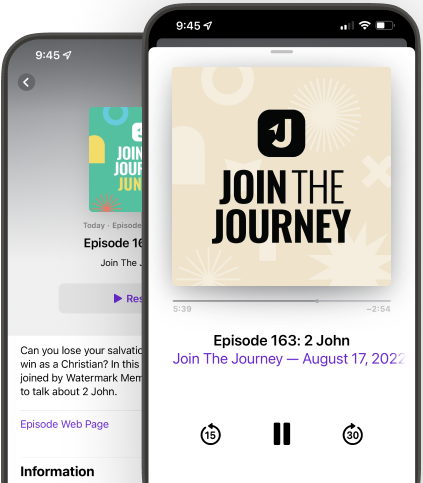
Listen to the Podcast
Listen NowDive Deeper | 1 Corinthians 1-6
When I was growing up, my parents would correct me when I had a bad attitude, disobeyed them, or acted carelessly. They didn't do this because they wanted to boss me around or have complete control but because they loved me and wanted the best for me. They gave me loving correction.
Paul is doing the same thing when he writes a letter to the Christians of Corinth after he received reports they were struggling with division, immorality, idolatry, and theological confusion. Corinth was a wealthy port city that was heavily influenced by idolatry and philosophy that began seeping into the lives of the Christians living there.
The Corinthian church's dysfunction is easy to see throughout these chapters. These believers struggled with division in the church; they picked their favorite leader and insulted and disrespected others who favored a different leader. They also struggled with sexual immorality, both between members of the church and with prostitutes, while worshiping at local temples to Greek gods.
You might read about their struggles and think, "Thank goodness that is not me!" But if we are honest, we have similar struggles. Maybe we do not worship Greek gods at local temples, but we share the root issue of not living out what we believe. As believers, we are called to glorify the Lord in every aspect of our lives because of the price paid for our lives when Jesus physically died and was resurrected (1 Corinthians 10:31). But we are often like the Christians in Corinth, justifying our actions and making everything about ourselves instead of the Lord.
Church life is messy and dysfunctional because it is made up of broken sinners (i.e., all of us). But be encouraged: the Lord doesn't make us do this life alone. He gives us the Holy Spirit when we accept him as Lord and Savior over our lives (John 14:16-17). The Spirit helps us, renews us, sanctifies us, and gives us wisdom to help us understand God, as revealed through Scripture (1 Corinthians 2:10-11).
This month's memory verse
"There is no difference between Jew and Gentile, for all have sinned and fall short of the glory of God, and all are justified freely by his grace through the redemption that came by Christ Jesus.” (NIV)
– Romans 3:22b-24
Discussion Questions
1. All sinners have dysfunction in their lives. When looking at the way you live, does every aspect of your life glorify God? If not, what changes or adjustments do you need to make?
2. Paul lovingly corrects the Corinthian Christians. Do you have people in your life—a group of close friends you can pray and talk with, confide in, and confess to (Hebrews 10:24-25)—who are willing to give you loving correction?
3. You received the Holy Spirit at the moment of salvation (Ephesians 1:13-14). As you go about your daily life, are you yielded to the Holy Spirit? Do you follow his lead and submit to his authority?